Résumé du livre
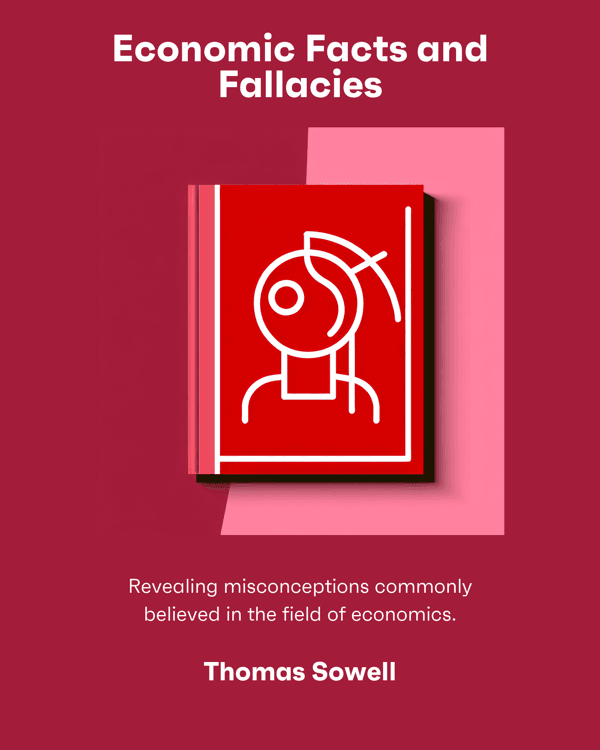
Thomas Sowell, an American economist, social commentator, and scholar, presently serves as a senior fellow at the Hoover Institution at Stanford University. Recognized for his extensive contributions that intertwine history, economics, and political science, he was honored with the National Humanities Medal in 2002.
The primary point in these summaries is that there are frequently recurring mistaken beliefs in economics. These include fallacies such as the zero-sum fallacy, which assumes that there must always be winners and losers, and the fallacy of composition, which confuses the part with the whole.
These fallacies have had a negative impact on economic policy and strategic thinking for many years. They have also hindered the efforts of various well-meaning activists, from environmentalists to anti-poverty campaigners. We can only start solving the world's problems once we dispel these fallacies.
Take practical steps: Avoid making emotional judgments. Whenever you come across news that triggers your anger, whether it's a story about wealth inequality or discrimination, take a moment to step back. Ensure that your emotions aren't clouding your judgment.
Are you certain that things are exactly as they appear? Do you possess all the necessary details? Is it possible that key context is missing? Only form an opinion when you have thoroughly examined the situation from all angles.
“People who pride themselves on their "complexity" and deride others for being "simplistic" should realize that the truth is often not very complicated.”
“There is never enough of anything to satisfy all those who want it. The first lesson of politics is to disregard the first lesson of economics.”
“There are no solutions. There are only trade-offs.”
Pour lire le reste du livre, téléchargez
Bitely









 12 min
 7 Bite
 Aperçu
 7 Bites