Self-Growth
Deep ThinkingDeep Thinking

Deep Thinking

user-icon

Garry Kasparov

The debate over whether chess qualifies as a sport remains unresolved, but its mental demands are undeniable, with players often experiencing exhaustion comparable to physical exertion. Garry Kasparov, through his analyses of grandmaster games documented in *My Great Predecessors*, highlighted how even the best players succumb to errors due to anxiety or mental fatigue. Emanuel Lasker exemplified the psychological dimension of chess, prioritizing moves that unsettled opponents over purely tactical logic. While humans are influenced by emotions, computers operate purely on strategy, their power growing exponentially since the 1950s. Early attempts, like MANIAC 1, laid the groundwork for AI’s eventual dominance, culminating in Kasparov’s historic matches against Deep Blue, which showcased machines’ ability to surpass human calculation. Beyond chess, AI’s rise mirrors broader societal shifts, with machines replacing humans in various fields, demanding adaptation to new roles. As AI evolves, its capacity to learn independently—whether in chess or other domains—signals a future where machines not only execute tasks but redefine them, challenging traditional human expertise.

clock13 min
bite7 Bite
target Aperçu

De quoi s'agit-il ?

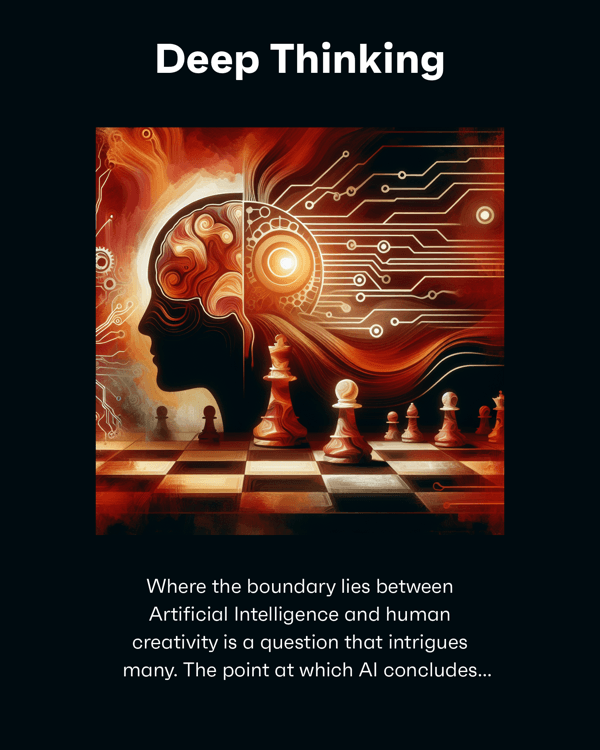
Chess is more than just a game; it’s a battleground of intellect, strategy, and resilience, where human ingenuity meets the relentless precision of artificial intelligence. This book explores the evolution of chess from its rich cultural roots to its intersection with cutting-edge technology, delving into the psychological nuances of human play and the rise of machine dominance. Through the lens of Garry Kasparov’s experiences, from his legendary matches to his reflections on competition and progress, readers are taken on a journey that examines the broader implications of AI on society. It’s a compelling narrative of tradition, innovation, and the ever-shifting balance between human creativity and computational power.

Résumé du livre

Garry Kasparov dominated the world of competitive chess for many years after winning his first World Chess Championship in 1985. He is considered to be one of the greatest ever players of the game. He is also a human rights activist and a popular public speaker. As an author, he has contributed to publications such as the Wall Street Journal. His other books include How Life Imitates Chess, and Winter is Coming.

The debate over whether chess qualifies as a sport remains unresolved, but its mental demands are undeniable, with players often experiencing exhaustion comparable to physical exertion. Garry Kasparov, through his analyses of grandmaster games documented in *My Great Predecessors*, highlighted how even the best players succumb to errors due to anxiety or mental fatigue. Emanuel Lasker exemplified the psychological dimension of chess, prioritizing moves that unsettled opponents over purely tactical logic. While humans are influenced by emotions, computers operate purely on strategy, their power growing exponentially since the 1950s. Early attempts, like MANIAC 1, laid the groundwork for AI’s eventual dominance, culminating in Kasparov’s historic matches against Deep Blue, which showcased machines’ ability to surpass human calculation. Beyond chess, AI’s rise mirrors broader societal shifts, with machines replacing humans in various fields, demanding adaptation to new roles. As AI evolves, its capacity to learn independently—whether in chess or other domains—signals a future where machines not only execute tasks but redefine them, challenging traditional human expertise.

Pour lire le reste du livre, téléchargez Bitely

appstoregoogleplayapp gallery
Toutes les bouchées
bite7 Bites

Breaking Stereotypes: Chess as a Cultural Force

1
logo

The Rise of Machines in Chess Mastery

2
logo

Machines Rising: The Shift in Human Labor

3
logo

Machines That Question: The Next AI Frontier

4
logo

Mastering Minds: Chess, AI, and Human Strategy

5
logo

Mastering Machines: How AI Learns to Think

6
logo

When Machines Outthink Masters

7
logo

Livres associés

mailbox-icon

Voulez-vous continuer à apprendre ?

Ne manquez pas les mises à jour de l'univers passionnant de Bitely !