Résumé du livre
Cass R. Sunstein is known for his pioneering work in behavioral economics and public policy, most notably as administrator of the White House Office of Information and Regulatory Affairs under President Obama. His books Simpler and Wiser have garnered widespread acclaim.
Decisions, whether routine or significant, shape our lives, and understanding how to approach them can reduce stress and improve outcomes. Secondary decisions, such as meal planning, simplify daily choices by frontloading effort (high-low strategy), while exploratory steps (low-low strategy) help navigate uncertainty. Delegation (low-high strategy) can ease initial decision-making but may complicate follow-ups, whereas overplanning (high-high strategy) should be avoided. Algorithms, though precise, face trust issues and limitations in emotional contexts, requiring a balance with human judgment. Beliefs, often shaped by biases and emotions, can be updated through self-awareness, engaging with opposing views, and leveraging shared values or credible validators. In an age of overwhelming information, it’s crucial to confront biases, weigh emotional and practical impacts, and embrace knowledge that fosters growth. Opting, or breaking down complex decisions into smaller steps, enables thoughtful choices, balancing logic, risk, and personal values for a fulfilling future.
Pour lire le reste du livre, téléchargez
Bitely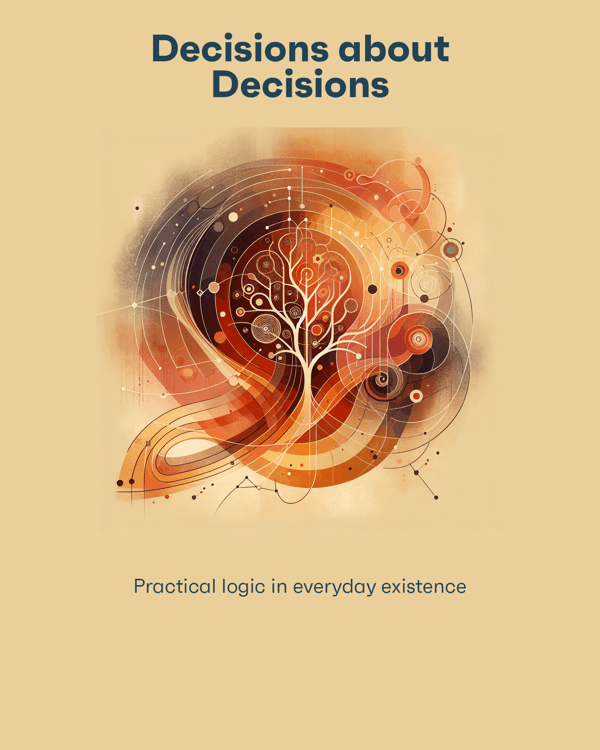

 12 min
 6 Bite
 Aperçu


 6 Bites