Résumé du livre
British historian Adam Tooze is a professor and the director of the European Institute at Columbia University, New York. His previous books include the Wolfson History Prize-winning The Wages of Destruction (2006), a study of Nazi Germany’s economic policies, and The Great Deluge (2014), an analysis of the Great War and the creation of a new international order.
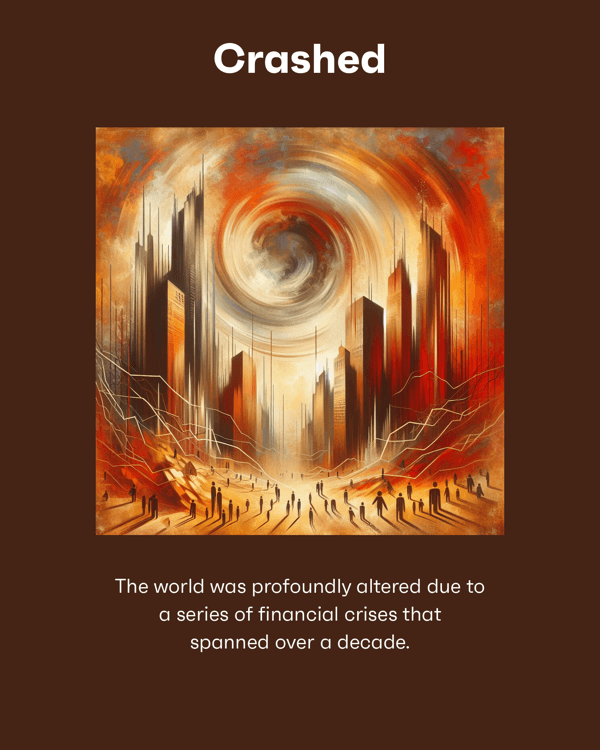
The 2008 financial crisis exposed deep systemic flaws and fueled widespread resentment, as those responsible for the collapse often avoided accountability and even received rewards, such as Wall Street's $18.4 billion in bonuses. Institutions like AIG epitomized this recklessness, failing to manage risks and later paying out massive bonuses despite catastrophic losses. The crisis devastated ordinary Americans, with millions losing homes and livelihoods, while sparking bipartisan anger over a system perceived as rigged for the elite. European banks, heavily entangled in risky U.S. mortgage securities, faced even greater vulnerabilities, leading to economic turmoil across the Eurozone and Eastern Europe, particularly in Ukraine, where geopolitical tensions escalated into conflict. The roots of the crisis stretched back decades, with deregulation and securitization creating a fragile financial system that collapsed when the U.S. housing market crashed. The global fallout was immense, crippling trade, employment, and financial centers like London, which struggled to recover amidst Brexit uncertainties. In the U.S., political discontent simmered until 2016, when voters rejected establishment candidates in favor of figures like Bernie Sanders and Donald Trump, whose campaigns channeled frustrations over inequality and economic instability. However, the policies that followed largely favored the wealthy, leaving unresolved tensions that continue to shape the political and economic landscape.
Pour lire le reste du livre, téléchargez
Bitely







 15 min
 9 Bite
 Aperçu
 9 Bites