Résumé du livre
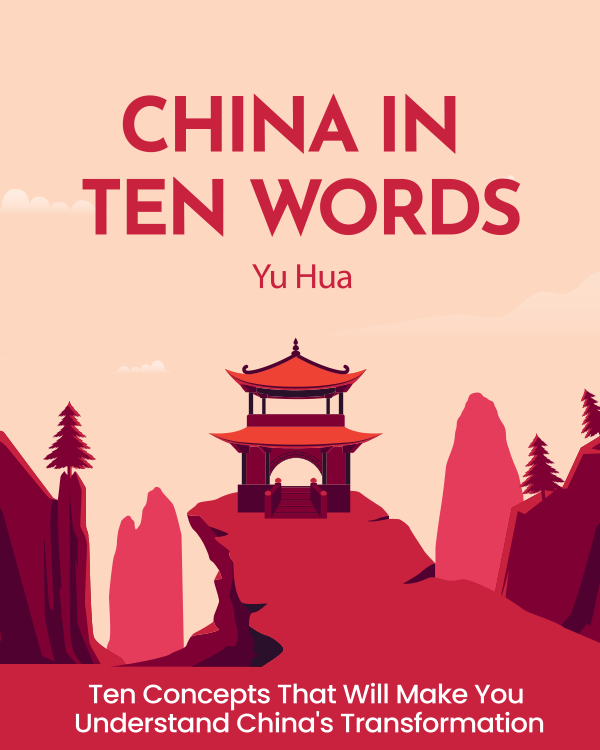
Having worked as a dentist for five years, Yu Hua transitioned to become a writer in 1983 due to her aversion to "examining people's mouths all day." Her upbringing during the Cultural Revolution is evident in many of her stories and novels, reflecting the impact of that period on her life.
Since the 1960s, China has undergone significant transformations. The turbulence of the Cultural Revolution has transitioned into consistent economic progress, and Mao's autocracy has been succeeded by a more reserved, collective leadership. Despite these changes, there are notable similarities between the two eras. Language, in its evolution and its enduring elements, provides an insightful way to unearth these connections. The Chinese vocabulary, from traditional terms like "reading" and "the people," to modern phrases like "bamboozling" and "copycat," offers intriguing insights into the country's history, current state, and potential future.
"Perhaps nothing in the world creates a greater bond between people than pain, because it comes from the depths of the heart."
“The more boldly a man dares, the more richly his land bears”
“That is the real tragedy: poverty and hunger are not as shocking as willful indifference to them.”
Pour lire le reste du livre, téléchargez
Bitely









 17 min
 10 Bite
 Aperçu
 10 Bites