Résumé du livre
Vasant Lad is a highly regarded Ayurvedic physician, educator, and founder of the Ayurvedic Institute in Albuquerque, USA. Over his career, he has served as medical director of the Ayurveda Hospital in Pune, India, and spent 15 years as professor of Clinical Medicine at Pune University’s College of Ayurvedic Medicine. He has written 12 books on the principles of Ayurveda, including The Complete Book of Ayurvedic Home Remedies and Textbook of Ayurveda.
Ayurveda offers a holistic approach to health by aligning daily habits with one’s dosha, emphasizing a balanced diet, routine, and calming practices like yoga and meditation. Dietary adjustments tailored to doshas—vata, pitta, and kapha—help maintain equilibrium, while seasonal changes necessitate further modifications. Beyond food, mindful eating and portion control are vital. Ayurvedic kitchens double as pharmacies, with ingredients like aloe vera, turmeric, and ginger serving therapeutic purposes. Rooted in Indian tradition, Ayurveda integrates science, spirituality, and philosophy, viewing individuals as microcosms of cosmic energy. Health is defined as a balance of doshas, digestive fire (agni), waste elimination, and harmony between body, mind, and consciousness. Imbalances, caused by emotions, diet, or environment, disrupt immunity and lead to disease. Ayurveda addresses these through detoxification, emotional release, and practices like pancha karma. Daily routines aligned with doshic rhythms, yoga tailored to doshas, and sleep positions harmonizing energies further enhance well-being. Grounded in the five elements—Ether, Air, Fire, Water, and Earth—Ayurveda sees these forces shaping the body and senses, with doshas governing biological and psychological functions. Understanding one’s doshic constitution enables personalized lifestyle adjustments for optimal health and balance.
Pour lire le reste du livre, téléchargez
Bitely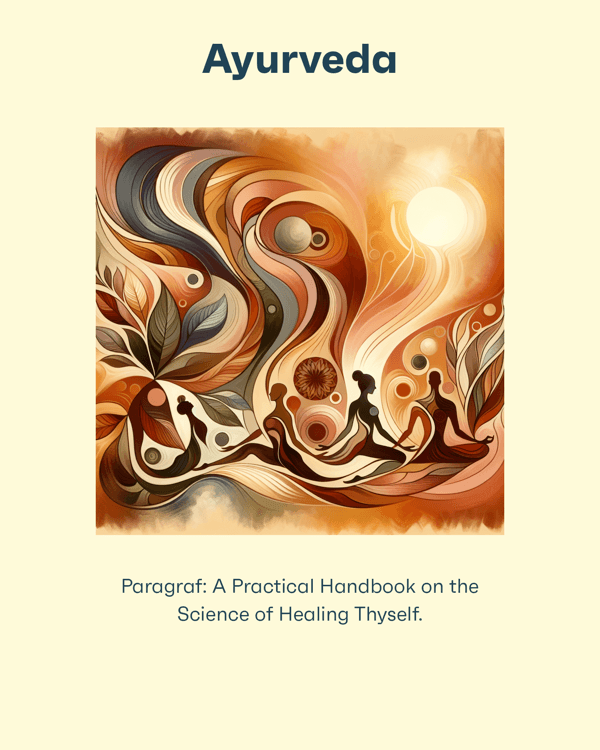

 11 min
 6 Bite
 Aperçu


 6 Bites