Biography & History
Age of AngerAge of Anger

Age of Anger

user-icon

Pankaj Mishra

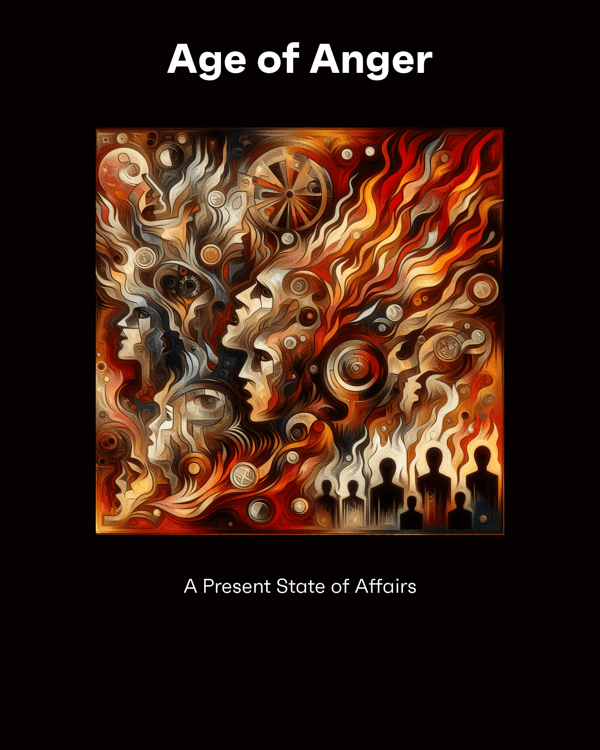
The West's unwavering confidence in its historical narrative is deeply flawed, as it overlooks critical issues that fuel ongoing social unrest. Chief among these is the failure of liberal capitalism, which, instead of delivering widespread prosperity, has bred materialism, dissatisfaction, and self-centeredness, often leading to troubling or violent behavior. This disillusionment extends globally, with figures like Abu Musab al Zarqawi embodying the shared fallout of this economic collapse, challenging the West’s tendency to blame Eastern violence solely on religion. Additionally, the divisive Clash of Civilizations theory, which frames Islam as inherently violent and incompatible with democracy, only deepens animosity. To move forward, the West must confront these realities, abandon scapegoating, and take responsibility for its systemic flaws. Enlightenment ideals, while foundational to Western society, have also exposed inequalities and sparked resentment, as the pursuit of individualism and secularism failed to address deeper societal divides. Concepts like Rousseau’s *amour-propre* and Kierkegaard’s *ressentiment* highlight the destructive effects of materialism, status-seeking, and social disillusionment, which are amplified in today’s globalized, consumer-driven world. These dynamics, exacerbated by the internet and the erosion of local and national identities, leave individuals vulnerable to manipulation by extremist groups and authoritarian leaders. As anger and resentment spread, the risk of widespread conflict grows, with the volatile actions of the disillusioned hinting at the possibility of a global civil war.

clock7 min
bite5 Bite
target Aperçu

De quoi s'agit-il ?

The book delves into the West's unshakable yet flawed confidence in its historical and ideological narratives, exploring how this has fueled social unrest and global tensions. It examines the failures of liberal capitalism, the divisive impact of theories like the Clash of Civilizations, and the rise of ressentiment—a deep-seated bitterness toward societal structures. Through historical insights, philosophical concepts, and contemporary examples, the text unpacks the roots of disillusionment and the allure of authoritarian figures in times of crisis. It challenges readers to confront uncomfortable truths about modern society and its trajectory.

Résumé du livre

Pankaj Mishra is an Indian author and essayist whose other works include From the Ruins of Empire: The Revolt Against the West and the Remaking of Asia, which became the first book by a non-Western writer to win the Leipzig Book Award for European Understanding. He also contributes to the New York Times, the Guardian and the New Yorker as well as numerous other publications.

The West's unwavering confidence in its historical narrative is deeply flawed, as it overlooks critical issues that fuel ongoing social unrest. Chief among these is the failure of liberal capitalism, which, instead of delivering widespread prosperity, has bred materialism, dissatisfaction, and self-centeredness, often leading to troubling or violent behavior. This disillusionment extends globally, with figures like Abu Musab al Zarqawi embodying the shared fallout of this economic collapse, challenging the West’s tendency to blame Eastern violence solely on religion. Additionally, the divisive Clash of Civilizations theory, which frames Islam as inherently violent and incompatible with democracy, only deepens animosity. To move forward, the West must confront these realities, abandon scapegoating, and take responsibility for its systemic flaws. Enlightenment ideals, while foundational to Western society, have also exposed inequalities and sparked resentment, as the pursuit of individualism and secularism failed to address deeper societal divides. Concepts like Rousseau’s *amour-propre* and Kierkegaard’s *ressentiment* highlight the destructive effects of materialism, status-seeking, and social disillusionment, which are amplified in today’s globalized, consumer-driven world. These dynamics, exacerbated by the internet and the erosion of local and national identities, leave individuals vulnerable to manipulation by extremist groups and authoritarian leaders. As anger and resentment spread, the risk of widespread conflict grows, with the volatile actions of the disillusioned hinting at the possibility of a global civil war.

Pour lire le reste du livre, téléchargez Bitely

appstoregoogleplayapp gallery
Toutes les bouchées
bite5 Bites

Enlightenment Ideals and Modern Disillusionment

1
logo

Ressentiment and the Age of Self-Obsession

2
logo

Rousseau’s Radical Challenge to Enlightenment Ideals

3
logo

Global Resentment: The Seeds of Unrest

4
logo

Reckoning with the West's Flawed Foundations

5
logo

Livres associés

mailbox-icon

Voulez-vous continuer à apprendre ?

Ne manquez pas les mises à jour de l'univers passionnant de Bitely !