
Philosophy
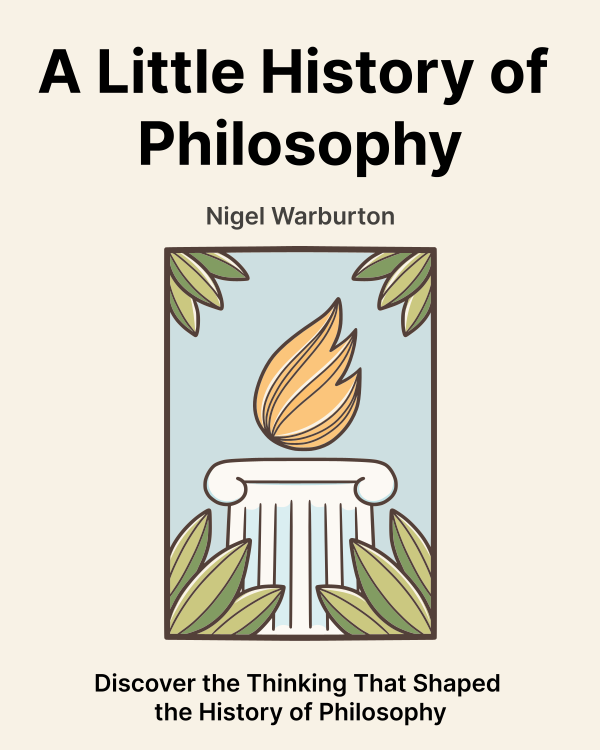
A Little History of PhilosophyA Little History of Philosophy
A Little History of Philosophy

A Little History of Philosophy

user-icon

Nigel Warburton

Throughout history, humans have constantly questioned life, the universe, and virtuous behavior. To this day, there has never been a definite consensus on how to answer these grueling philosophical questions. It is nonetheless reassuring, awe-inspiring, as well as challenging to contemplate the ideas proposed over the past 2500 years.

hashtagpsychology
hashtagculture
hashtagworld-history
clock16 min
bite7 Bite
target Aperçu

De quoi s'agit-il ?

A Little History of Philosophy will take you on a journey starting over two thousand years ago when great thinkers established the principles of philosophy as we know it today. The book shows how philosophical questions from the ancient world to twentieth-century Germany are as relevant today as they were centuries ago.

Résumé du livre

Nigel Warburton is a British philosopher, writer, and educator known for his contributions to the field of philosophy and for his popular books and podcasts on philosophical topics.

Throughout history, humans have constantly questioned life, the universe, and virtuous behavior. To this day, there has never been a definite consensus on how to answer these grueling philosophical questions. It is nonetheless reassuring, awe-inspiring, as well as challenging to contemplate the ideas proposed over the past 2500 years.

“The best way to live, then, was this: have a very simple lifestyle, be kind to those around you, and surround yourself with friends.”

“Free speech is one of the core values in a democracy and it should be championed with a vengeance.”

“The problem as he saw it was not how short our lives are, but rather how badly most of us use what time we have.”

Pour lire le reste du livre, téléchargez Bitely
appstoregoogleplayapp gallery
Toutes les bouchées
bite7 Bites

Plato and Socrates addressed fundamental questions that helped initiate philosophy.

1
logo

In his philosophy, Aristotle describes a way to flourish as a human being.

2
logo

Epicurus suggested that death should be faced without fear and simple pleasures should be the goal of life.

3
logo

The goal of Rousseau was to lead humans back to their natural state of happiness.

4
logo

Kant believed that our actions are moral when they embody the universal maxims that they represent.

5
logo

According to Nietzsche, atheism challenges our fundamental moral assumptions.

6
logo

Wittgenstein didn’t seek answers to philosophical questions but ways to dispel them.

7
logo

Livres associés

mailbox-icon

Voulez-vous continuer à apprendre ?

Ne manquez pas les mises à jour de l'univers passionnant de Bitely !