Leadership & Entrepreneurship
A First-Rate MadnessA First-Rate Madness

A First-Rate Madness

user-icon

Nassir Ghaemi

In exploring the intersection of leadership and mental health, the author examines how figures like Churchill, Kennedy, Gandhi, and King navigated their struggles to shape history. Churchill’s depressive tendencies, possibly linked to type II bipolar disorder, allowed him to foresee the Nazi threat with clarity, while Kennedy’s hyperthymic personality contributed to his creative and measured handling of the Cuban Missile Crisis. Similarly, Gandhi and King, both grappling with depression, channeled their heightened empathy into philosophies of radical non-violence, transforming adversity into strength. The author contrasts these leaders with Bush and Blair, whose conventional cognitive patterns led to rigid decision-making during the Iraq War, suggesting that leaders with mental health conditions might approach crises with greater creativity and flexibility. By destigmatizing mental illness, the author argues, society can better appreciate the unique strengths it can bring to leadership, offering a nuanced understanding of history and human potential.

clock10 min
bite5 Bite
target Aperçu

De quoi s'agit-il ?

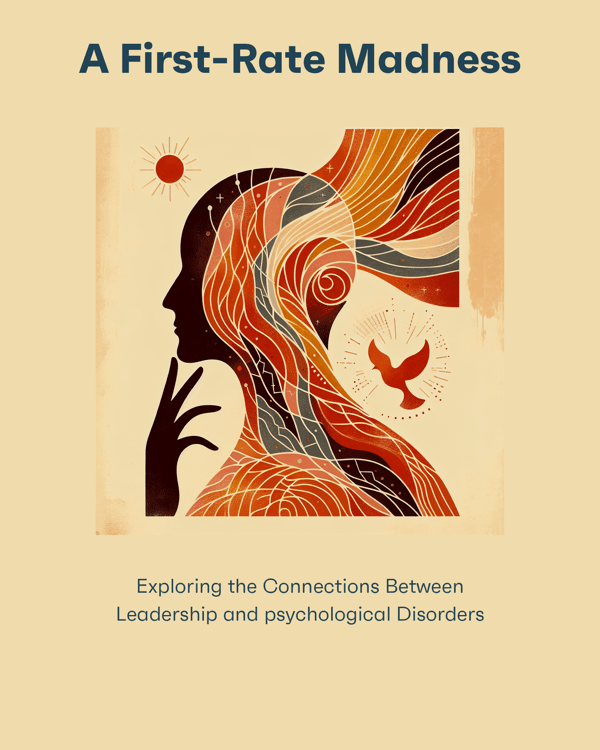
This book delves into the complex intersection of mental health and leadership, exploring how psychological struggles have shaped some of history’s most influential figures. Through the lens of leaders like Winston Churchill, John F. Kennedy, Mahatma Gandhi, and Martin Luther King Jr., the author examines how conditions such as depression and bipolar disorder influenced their decision-making, empathy, and resilience during pivotal moments. By challenging societal stigmas around mental illness, the narrative highlights the unique strengths these challenges can foster, offering a fresh perspective on leadership and human potential.

Résumé du livre

Nassir Ghaemi is a psychiatrist and professor of psychiatry at Tufts Medical Center. He also lectures on psychiatry at Harvard Medical School. His research specialisms include depression and bipolar disorder. He has published over 200 scientific articles and is a Distinguished Fellow of the American Psychiatry Association.

In exploring the intersection of leadership and mental health, the author examines how figures like Churchill, Kennedy, Gandhi, and King navigated their struggles to shape history. Churchill’s depressive tendencies, possibly linked to type II bipolar disorder, allowed him to foresee the Nazi threat with clarity, while Kennedy’s hyperthymic personality contributed to his creative and measured handling of the Cuban Missile Crisis. Similarly, Gandhi and King, both grappling with depression, channeled their heightened empathy into philosophies of radical non-violence, transforming adversity into strength. The author contrasts these leaders with Bush and Blair, whose conventional cognitive patterns led to rigid decision-making during the Iraq War, suggesting that leaders with mental health conditions might approach crises with greater creativity and flexibility. By destigmatizing mental illness, the author argues, society can better appreciate the unique strengths it can bring to leadership, offering a nuanced understanding of history and human potential.

Pour lire le reste du livre, téléchargez Bitely

appstoregoogleplayapp gallery
Toutes les bouchées
bite5 Bites

How Mental Health Shaped History’s Leaders

1
logo

How Mental Struggles Shaped Visionary Leadership

2
logo

Leaders, Mental Health, and Defining Moments

3
logo

Mental Health and Leadership: Rethinking Crisis Decisions

4
logo

Leaders Shaped by Struggles: Mental Health’s Hidden Role

5
logo

Livres associés

mailbox-icon

Voulez-vous continuer à apprendre ?

Ne manquez pas les mises à jour de l'univers passionnant de Bitely !