Politics & Society
The Shadow DocketThe Shadow Docket

The Shadow Docket

user-icon

Stephen Vladeck

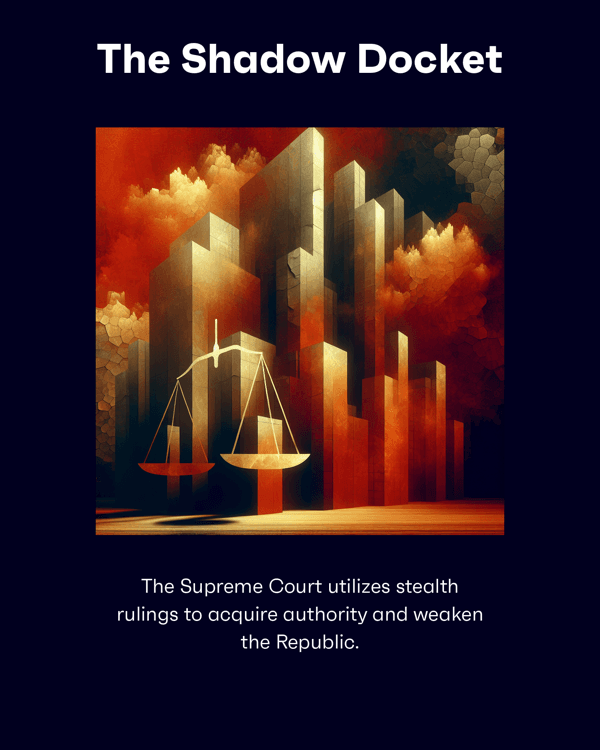
Public trust in the Supreme Court is eroding, and Vladeck identifies the shadow docket as a major contributor to this decline. The issue lies not only in the unsigned, unexplained, and increasingly frequent nature of these rulings but also in their tendency to align with specific political agendas, creating a troubling pattern. This undermines the Court’s credibility and its role as a coequal branch of government, which relies on public confidence to enforce its decisions. Transparency is key to addressing these concerns, and efforts to scrutinize the shadow docket are gaining momentum. Critics like conservative attorney Donald Ayer and Justice Elena Kagan have voiced strong objections to the Court’s handling of these cases, while Chief Justice John Roberts has emerged as a rare figure willing to dissent from his conservative peers in shadow docket rulings. The shadow docket, which encompasses procedural decisions like granting certiorari and issuing injunctions, constitutes the vast majority of the Court’s rulings. However, its opaque nature and growing use to enact significant legal changes—often favoring conservative outcomes—have raised alarms. This shift became particularly pronounced in the mid-2010s, with decisions affecting areas like elections, immigration, and capital punishment. For instance, the Purcell Principle, established in *Purcell v. Gonzalez* (2006), and the *Shelby County v. Holder* (2013) ruling collectively enabled restrictive voting laws, disproportionately impacting elections. The pandemic further highlighted a partisan trend in shadow docket rulings, favoring Republicans. Historically reserved for urgent cases, emergency relief requests surged under the Trump administration, with a striking number approved, often overriding lower court decisions unfavorable to the administration. This evolving use of the shadow docket underscores its profound impact on the legal and political landscape.

clock6 min
bite4 Bite
target Perspectiva

¿De qué trata?

The Supreme Court’s shadow docket has emerged as a controversial yet critical aspect of its operations, raising concerns about transparency and impartiality. This book delves into how these often unsigned, unexplained procedural rulings—comprising the vast majority of the Court’s decisions—have increasingly shaped American law in ways that appear to favor specific political agendas. Through detailed analysis, it examines the erosion of public trust in the Court’s authority and the broader implications for democracy. Engaging and meticulously researched, it explores the shadow docket’s impact on pivotal issues like elections, immigration, and emergency relief, while spotlighting efforts to bring these practices into the light.

Resumen del libro

Stephen Vladeck is the Chair of Federal Courts at the University of Texas School of Law. He has argued more than a dozen cases before the Supreme Court, and his work has appeared in legal journals such as the Harvard Law Review and the Yale Law Journal. He is currently a Supreme Court analyst for CNN.

Public trust in the Supreme Court is eroding, and Vladeck identifies the shadow docket as a major contributor to this decline. The issue lies not only in the unsigned, unexplained, and increasingly frequent nature of these rulings but also in their tendency to align with specific political agendas, creating a troubling pattern. This undermines the Court’s credibility and its role as a coequal branch of government, which relies on public confidence to enforce its decisions. Transparency is key to addressing these concerns, and efforts to scrutinize the shadow docket are gaining momentum. Critics like conservative attorney Donald Ayer and Justice Elena Kagan have voiced strong objections to the Court’s handling of these cases, while Chief Justice John Roberts has emerged as a rare figure willing to dissent from his conservative peers in shadow docket rulings. The shadow docket, which encompasses procedural decisions like granting certiorari and issuing injunctions, constitutes the vast majority of the Court’s rulings. However, its opaque nature and growing use to enact significant legal changes—often favoring conservative outcomes—have raised alarms. This shift became particularly pronounced in the mid-2010s, with decisions affecting areas like elections, immigration, and capital punishment. For instance, the Purcell Principle, established in *Purcell v. Gonzalez* (2006), and the *Shelby County v. Holder* (2013) ruling collectively enabled restrictive voting laws, disproportionately impacting elections. The pandemic further highlighted a partisan trend in shadow docket rulings, favoring Republicans. Historically reserved for urgent cases, emergency relief requests surged under the Trump administration, with a striking number approved, often overriding lower court decisions unfavorable to the administration. This evolving use of the shadow docket underscores its profound impact on the legal and political landscape.

Para leer el resto del libro puedes descargar Bitely

appstoregoogleplayapp gallery
Todos los bocados
bite4 Bites

Unveiling the Supreme Court's Shadow Docket

1
logo

Shadow Docket: The Supreme Court's Quiet Power

2
logo

Shadow Docket’s Role in Shaping Elections

3
logo

Unveiling the Supreme Court’s Shadow Docket

4
logo

Libros relacionados

mailbox-icon

¿Quieres seguir aprendiendo?

¡No te pierdas las actualizaciones del emocionante universo de Bitely!