Parenting
No Drama DisciplineNo Drama Discipline
No Drama Discipline

No Drama Discipline

user-icon

Tina Payne Bryson

Discipline should be seen as a valuable opportunity to impart essential relationship and behavioral skills to your children, engaging their higher-level thinking processes. In this process, it is crucial to actively listen, validate their experiences, and provide comfort, while also maintaining response flexibility. You should focus on building strong relationships with your children and guiding them towards developing mindsight outcomes before redirecting their behavior towards more positive alternatives.

hashtagtrending
hashtagpsychology
hashtageducation
hashtagfamily life
hashtagchildren
clock15 min
bite7 Bite
target Perspectiva

¿De qué trata?

No-Drama Discipline presents a novel perspective on child discipline, highlighting the significance of teaching rather than punishment. Grounded in neuroscience, this approach minimizes conflicts and offers guidance to parents on fostering stronger relationships with their children.

Resumen del libro

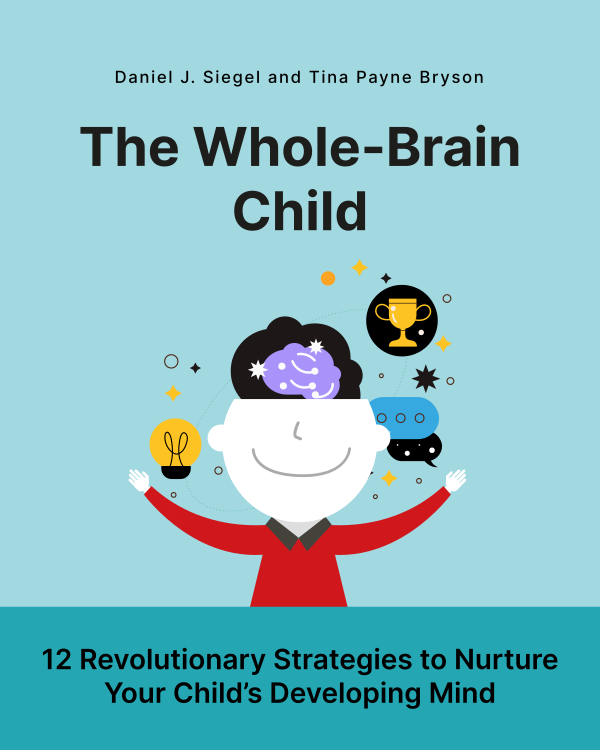
Tina Payne Bryson is a psychotherapist, author, and renowned expert in the field of child psychology and parenting. She has co-authored several books with Dr. Daniel J. Siegel, including "The Whole-Brain Child" and "No-Drama Discipline," which offer insights and strategies for parents to better understand and connect with their children. Bryson's work focuses on fostering healthy child development, effective discipline, and nurturing parent-child relationships. She has become a prominent figure in the field of child psychology and is known for her contributions to helping parents navigate the challenges of raising emotionally intelligent and resilient children.

Discipline should be seen as a valuable opportunity to impart essential relationship and behavioral skills to your children, engaging their higher-level thinking processes. In this process, it is crucial to actively listen, validate their experiences, and provide comfort, while also maintaining response flexibility. You should focus on building strong relationships with your children and guiding them towards developing mindsight outcomes before redirecting their behavior towards more positive alternatives.

"When your child is at his worst, that’s when he needs you the most."

"The way we learn how to be resilient and how to handle difficult things is by practicing sitting in, dealing with and walking through difficult stuff."

"Showing up, being present in the moment and helping someone feel safe, seen and soothed, that's my North Star. That is always the answer."

Para leer el resto del libro puedes descargar Bitely

appstoregoogleplayapp gallery
Todos los bocados
bite7 Bites

Instead of being a punishment, discipline should be a teaching tool.

1
logo

Misbehavior should be viewed as a development opportunity since the brain can be reshaped.

2
logo

When your children misbehave, connecting with them makes them more receptive and helps them learn.

3
logo

Establish a connection with your child through comforting communication, providing validation, and actively listening to them.

4
logo

Stay flexible in your responses by checking in, trying to understand, and considering effective strategies.

5
logo

To encourage your child to behave well, use mind sight outcomes.

6
logo

When guiding your child away from misbehavior, focus on the positives and avoid lengthy lectures.

7
logo

Libros relacionados

mailbox-icon

¿Quieres seguir aprendiendo?

¡No te pierdas las actualizaciones del emocionante universo de Bitely!