Philosophy
Being and NothingnessBeing and Nothingness

Being and Nothingness

user-icon

Jean-Paul Sartre

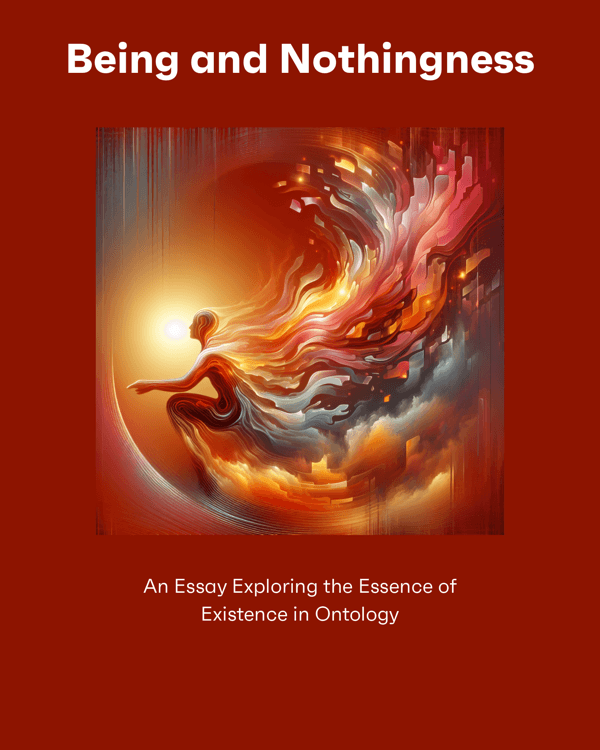
Sartre’s philosophy centers on the concept of being-for-itself, a state of conscious existence defined by freedom and the absence of predetermined essence, contrasting with the unconscious, static nature of being-in-itself. Human consciousness transcends rigid categories, encompassing both internal awareness and engagement with the external world. This perspective also reshapes our understanding of time, rejecting linearity in favor of a unified flow of past, present, and future within consciousness. Existentialism posits that humans lack a fixed identity, creating themselves through choices and actions, which is both liberating and anxiety-inducing. Our sense of self emerges through interactions with others, whose perspectives shape and challenge us, particularly in relationships, where the tension between connection and independence is ever-present. Sartre emphasizes appearance and occurrence over abstract essences, asserting that we can only engage with existence as it manifests to our awareness. Existence arises from emptiness, with human freedom rooted in the ability to negate and imagine what does not exist. While many escape this absurd reality through self-deception, Sartre advocates for embracing emptiness as an opportunity to create meaning. This freedom, though constrained by external factors and mortality, defines humanity and demands responsibility, highlighting the paradox of freedom as both a burden and a gift.

clock8 min
bite5 Bite
target Perspectiva

¿De qué trata?

Confronting the absurdity of existence, Sartre’s philosophy explores the radical freedom and self-awareness that define human consciousness. Through the lens of existentialism, he dismantles notions of predetermined essence, emphasizing our responsibility to shape meaning in a world devoid of inherent purpose. By examining the interplay between self, others, and the external world, Sartre reveals the tension between freedom and limitation, connection and independence. His thought-provoking ideas challenge us to navigate existence authentically, embracing both the exhilaration and anxiety of creating our own destiny.

Resumen del libro

Jean-Paul Sartre (1905-1980) was a pioneering French philosopher, novelist, playwright, and political activist. A founding figure of existentialist philosophy, he emphasized radical human freedom and responsibility. His influential works Being and Nothingness (1943) and Nausea (1938), as well as his public intellectual engagement, made him one of the most famous European thinkers of the twentieth century.

Sartre’s philosophy centers on the concept of being-for-itself, a state of conscious existence defined by freedom and the absence of predetermined essence, contrasting with the unconscious, static nature of being-in-itself. Human consciousness transcends rigid categories, encompassing both internal awareness and engagement with the external world. This perspective also reshapes our understanding of time, rejecting linearity in favor of a unified flow of past, present, and future within consciousness. Existentialism posits that humans lack a fixed identity, creating themselves through choices and actions, which is both liberating and anxiety-inducing. Our sense of self emerges through interactions with others, whose perspectives shape and challenge us, particularly in relationships, where the tension between connection and independence is ever-present. Sartre emphasizes appearance and occurrence over abstract essences, asserting that we can only engage with existence as it manifests to our awareness. Existence arises from emptiness, with human freedom rooted in the ability to negate and imagine what does not exist. While many escape this absurd reality through self-deception, Sartre advocates for embracing emptiness as an opportunity to create meaning. This freedom, though constrained by external factors and mortality, defines humanity and demands responsibility, highlighting the paradox of freedom as both a burden and a gift.

Para leer el resto del libro puedes descargar Bitely

appstoregoogleplayapp gallery
Todos los bocados
bite5 Bites

Defining Existence Through Freedom and Awareness

1
logo

Embracing Emptiness: The Freedom to Exist

2
logo

Crafting Freedom: Embracing Conscious Existence

3
logo

Freedom, Identity, and the Gaze of Others

4
logo

Crafting Freedom: The Paradox of Human Existence

5
logo

Libros relacionados

mailbox-icon

¿Quieres seguir aprendiendo?

¡No te pierdas las actualizaciones del emocionante universo de Bitely!