Buchzusammenfassung
James Suzman is a South African-born anthropologist and writer. He has published widely on the San people as well as the Ju/’hoansi bushmen of the Kalahari. In 2017, he published Affluence Without Abundance, based on 25 years working with the Ju/’hoansi in the field.
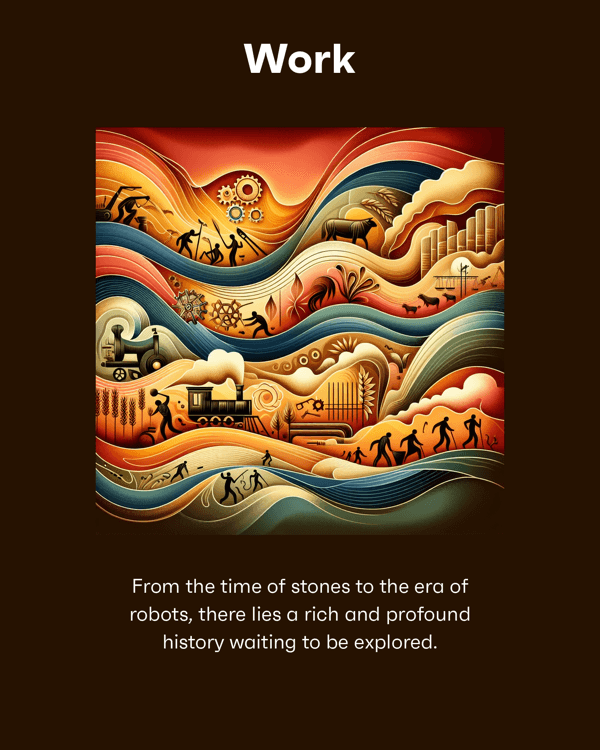
Early humans transitioned from basic tools to specialized ones, with evidence like snail bead jewelry and engraved ochre stones suggesting leisure and creativity as early as 75,000 years ago. The shift from hunting and gathering to farming and later industrialization fundamentally transformed human work, leisure, and societal structures. Hunter-gatherers, who worked less and avoided resource hoarding, gave way to farmers facing labor-intensive lifestyles and population pressures, exemplified by the Malthusian trap. Innovations like fire, domesticated animals, and eventually the steam engine revolutionized productivity but also introduced inequality, urbanization, and environmental challenges. Cities, emerging from fertile regions, fostered labor specialization, social hierarchies, and the invention of writing, which enabled wealth accumulation and complex societal interactions. These developments, driven by evolving relationships with energy, resources, and collaboration, set the stage for the industrial revolutions that reshaped modern life.
Um den Rest des Buches zu lesen, können Sie
Bitely herunterladen








 15 min
 8 Bite
 Einblick
 8 Bites