Psychology
Widen the WindowWiden the Window

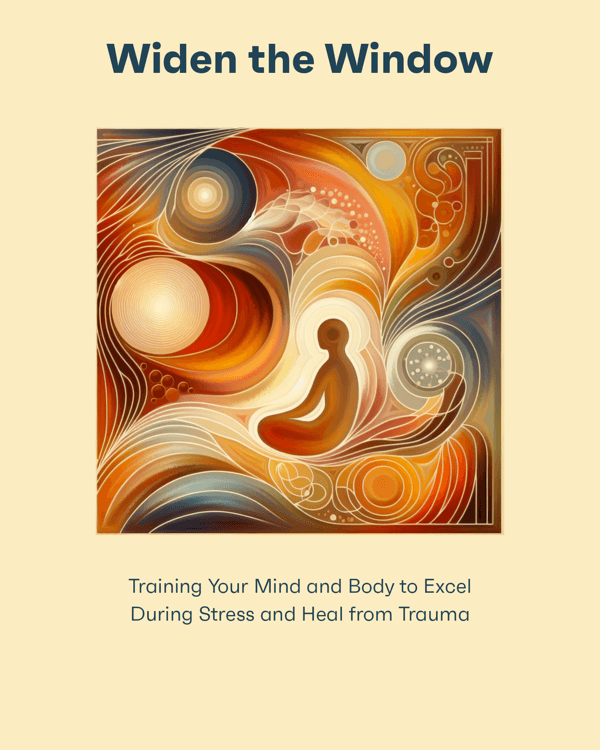
Widen the Window

user-icon

Elizabeth A. Stanley

The body’s stress response is designed to provide a surge of energy to handle danger, but recovery, managed by the survival brain through allostasis, is essential for restoring balance. Chronic stress or unresolved trauma disrupts this recovery, keeping the survival brain in a state of alertness and leading to dysregulation, where essential systems like the nervous, hormonal, and immune systems are impaired. This can result from ongoing stressors or negative thought patterns, as the survival brain cannot distinguish between real threats and imagined fears. Addressing dysregulation begins with recognizing personal stress responses and coping mechanisms, such as through journaling, and using mindfulness to foster a sense of safety and recovery. Stress and trauma, though often viewed as separate, exist on a continuum, with both triggering similar survival responses differing only in intensity. Programs like MMFT help expand stress tolerance windows through consistent practice, addressing factors like genetics, upbringing, and life experiences that shape stress responses. Dysregulation manifests in cycles of overactivation and exhaustion, harming mental and physical health, cognitive abilities, and decision-making. While stress cannot be eliminated, moderate stress, or eustress, can enhance performance, as shown by the Yerkes-Dodson curve. Chronic stress, however, narrows the stress tolerance window, increasing susceptibility to emotional breakdowns and unhealthy coping mechanisms. Breaking this cycle involves understanding stress factors, practicing mindfulness, and cultivating healthier habits like maintaining social connections, sufficient sleep, balanced nutrition, and regular exercise to support overall well-being.

clock11 min
bite8 Bite
target Einblick

Worum geht es?

This book delves into the intricate relationship between stress, trauma, and the brain, revealing how our survival instincts can both protect and harm us. It explores the science behind stress responses, the impact of unresolved trauma, and the ways chronic stress can disrupt mental and physical health. With practical tools like mindfulness and habit-building, it offers strategies to expand your stress tolerance and foster recovery. By understanding your unique stress patterns, you’ll gain the insight needed to navigate life’s challenges and promote lasting well-being.

Buchzusammenfassung

Elizabeth A. Stanley is a US Army veteran, award-winning author, and associate professor of security studies at Georgetown University. She holds degrees in political science and strategy from Harvard, Yale, and MIT, and has used her experience to create the acclaimed Mindfulness-based Mind Fitness Training (MMFT), a method used to help soldiers and civilians manage high-stress situations.

The body’s stress response is designed to provide a surge of energy to handle danger, but recovery, managed by the survival brain through allostasis, is essential for restoring balance. Chronic stress or unresolved trauma disrupts this recovery, keeping the survival brain in a state of alertness and leading to dysregulation, where essential systems like the nervous, hormonal, and immune systems are impaired. This can result from ongoing stressors or negative thought patterns, as the survival brain cannot distinguish between real threats and imagined fears. Addressing dysregulation begins with recognizing personal stress responses and coping mechanisms, such as through journaling, and using mindfulness to foster a sense of safety and recovery. Stress and trauma, though often viewed as separate, exist on a continuum, with both triggering similar survival responses differing only in intensity. Programs like MMFT help expand stress tolerance windows through consistent practice, addressing factors like genetics, upbringing, and life experiences that shape stress responses. Dysregulation manifests in cycles of overactivation and exhaustion, harming mental and physical health, cognitive abilities, and decision-making. While stress cannot be eliminated, moderate stress, or eustress, can enhance performance, as shown by the Yerkes-Dodson curve. Chronic stress, however, narrows the stress tolerance window, increasing susceptibility to emotional breakdowns and unhealthy coping mechanisms. Breaking this cycle involves understanding stress factors, practicing mindfulness, and cultivating healthier habits like maintaining social connections, sufficient sleep, balanced nutrition, and regular exercise to support overall well-being.

Um den Rest des Buches zu lesen, können Sie Bitely herunterladen
appstoregoogleplayapp gallery
Alle Bissen
bite8 Bites

Stress and Trauma: Bridging the Survival Spectrum

1
logo

Mastering Stress Recovery for Lasting Balance

2
logo

Breaking the Stress Cycle: Mastering Dysregulation

3
logo

Expanding Your Stress Window for Resilience

4
logo

Expanding Your Stress Window for Resilience

5
logo

Mapping Your Stress: Pathways to Recovery

6
logo

Expanding Resilience: Mastering Stress and Trauma

7
logo

Mastering Stress Recovery Through Mindfulness

8
logo

Verwandte Bücher

mailbox-icon

Möchten Sie weiter lernen?

Verpassen Sie keine Updates aus dem aufregenden Universum von Bitely!