Buchzusammenfassung
Margaret MacMillan is a historian, professor emerita of international history at Oxford University, and professor emerita of history at the University of Toronto. In 2018, she was the Reith lecturer, giving talks in five major cities on the subject of war. She is also a fellow of the Royal Society for Literature and the best-selling author of Paris 1919, which won numerous awards, and The War That Ended Peace, which was named a New York Times Notable Book.
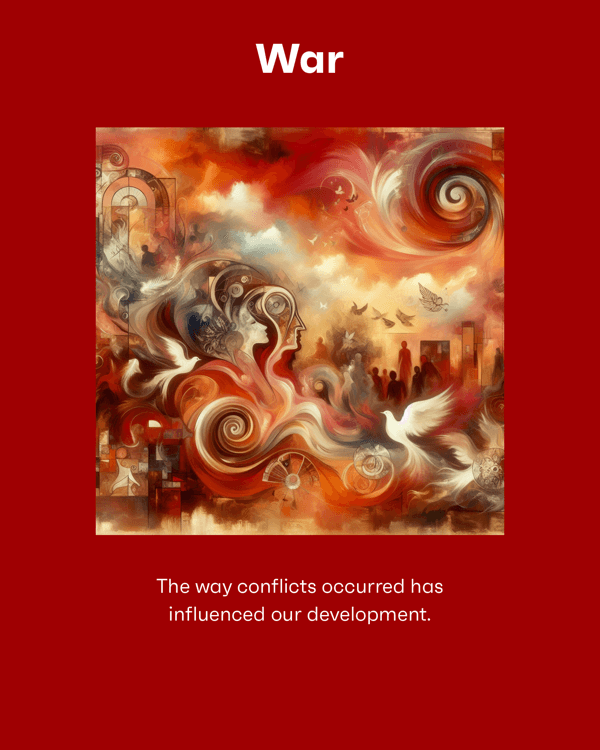
Combat is a multifaceted experience, blending sensory elements and emotions that defy simple description. Throughout history, its portrayal has varied widely, from the detached precision of ancient Greek accounts to the raw, personal recollections of soldiers. Artistic depictions, too, range from the surreal beauty of *Apocalypse Now* to the grim realism of Goya’s *The Disasters of War*. Our collective memory of war is shaped by post-conflict narratives, often simplifying complex realities, as seen in the contrasting perceptions of World War I and II. The enduring presence of conflict in human history, exemplified by Ötzi the Iceman’s violent death, raises questions about whether warfare is biologically ingrained. Studies of our primate relatives, chimpanzees and bonobos, reveal both aggression and cooperation, reflecting humanity’s dual capacity for violence and peace. Motivations for war are equally complex, ranging from survival and ideology to greed and emotion, as seen in examples like the Battle of Towton, Napoleon’s campaigns, and Saddam Hussein’s invasion of Kuwait. Cultural values have shaped warfare, influencing tactics, technology, and even the use of culture itself as a weapon, as in the Spanish conquest of the Incas. Civilians, often caught in the crossfire, face immense suffering, from economic hardship to targeted violence, yet war has also brought societal changes, such as increased roles for women. Despite efforts to regulate conflict through laws and ethics, the chaos of war frequently overrides these frameworks, leaving its participants—soldiers and civilians alike—entangled in its devastating and transformative impact. The next section will delve deeper into the evolving role of civilians in wartime.
Um den Rest des Buches zu lesen, können Sie
Bitely herunterladen

 16 min
 8 Bite
 Einblick


 8 Bites