Buchzusammenfassung
James Joyce was an Irish modernist writer known for his groundbreaking contributions to twentieth-century literature, including A Portrait of the Artist as a Young Man and Ulysses. His innovative works have had a profound influence on postmodern literature.
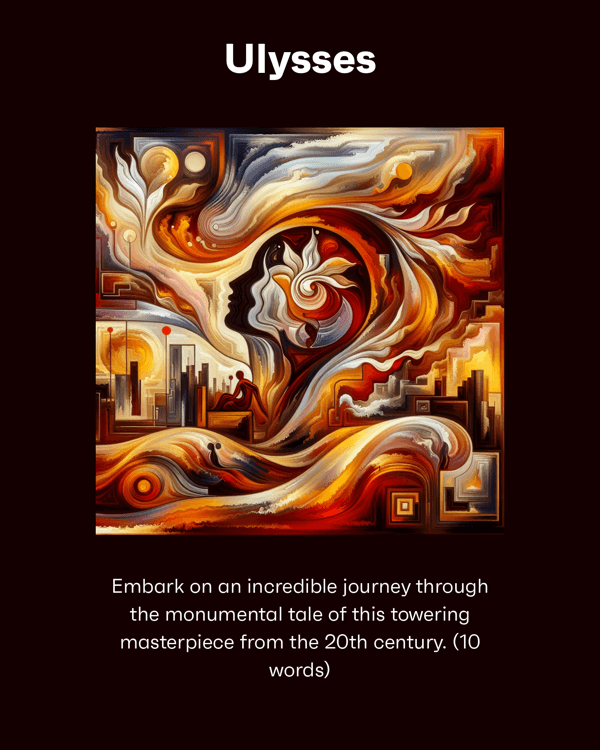
James Joyce’s *Ulysses* abandons a dense narrative in favor of following characters through a single day filled with personal struggles and insecurities. Divided into 18 episodes across three parts, the novel begins with Stephen Dedalus, whose introspections and dialogues reveal both his inner turmoil and the perspectives of those around him. The focus later shifts to Leopold Bloom, a Jewish Hungarian advertising agent, as themes of identity, religion, and nationalism emerge through his interactions and eventual convergence with Stephen. The novel intricately weaves themes of connection, alienation, and the mundane aspects of daily life, culminating in Molly Bloom’s evocative stream-of-consciousness soliloquy. As a cornerstone of modernism, *Ulysses* revolutionized literature with its experimental language, narrative structures, and stream-of-consciousness technique, influencing writers, artists, and filmmakers alike. Its meticulous depiction of Dublin set a precedent for exploring the cultural essence of locales, while its role in challenging censorship laws marked a turning point for freedom of expression. By reimagining Homer’s *The Odyssey* through a modern lens, Joyce juxtaposes the epic heroism of Odysseus with the ordinary, anti-heroic life of Leopold Bloom, replacing mythic grandeur with gritty realism and fragmented storytelling. This transformative masterpiece continues to shape artistic expression, offering a profound exploration of modern life and the human condition.
Um den Rest des Buches zu lesen, können Sie
Bitely herunterladen

 4 min
4 min 3 Bite
 Einblick


 3 Bites