Buchzusammenfassung
Peter Frankopan is Professor of Global History at Oxford University and director of the Oxford Centre for Byzantine Research. He is also the international bestselling author of The Silk Roads: A New History of the World (2015).
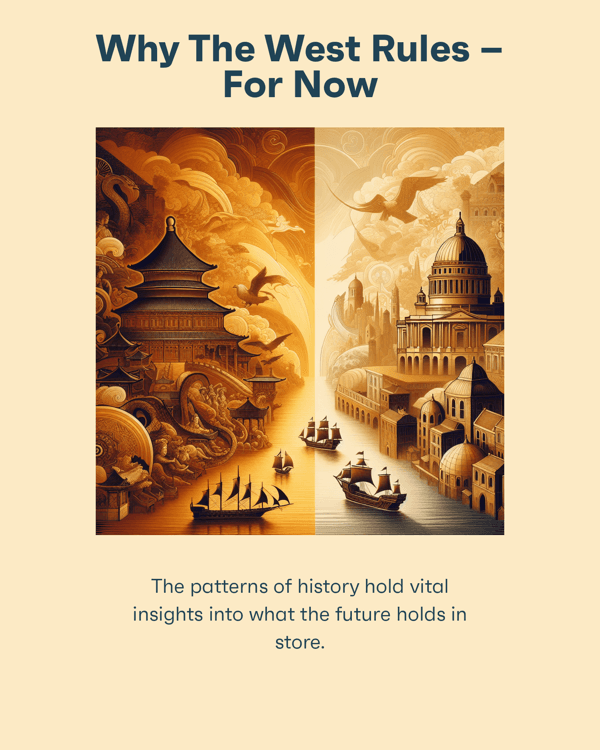
Europe's rise as a global trade hub began with the daring expeditions of its sailors, leading to the dominance of Portugal and Spain by 1500. However, this supremacy was short-lived as Northern Europe, particularly England and the Netherlands, reshaped the power dynamics through innovative trading companies like the East India Company and the Dutch East Indies Company, which laid the groundwork for modern corporations. By the 19th century, Russia's territorial expansion and conflicts with the Ottoman Empire brought it into strategic competition with Britain, culminating in alliances that set the stage for World War I. The 20th century saw shifting alliances and betrayals, such as the Nazi-Soviet pact and Germany's subsequent invasion of the Soviet Union, driven by resource ambitions. Meanwhile, the early Islamic conquests unified the Arabian Peninsula under a single faith, dominating trade routes and fostering a golden age of scientific and cultural advancements. Europe's post-Black Death recovery spurred technological progress and exploration, with Portugal and Spain leading global expeditions that brought wealth to Europe at the expense of indigenous populations and the rise of the transatlantic slave trade. The Silk Roads, vital for trade and cultural exchange, connected civilizations, spreading goods, ideas, and religions like Buddhism and Christianity. The Mongols, once underestimated, built a vast empire that controlled these routes, influencing global trade and inadvertently spreading the Black Death, which reshaped Europe. Persia's rich oil reserves became a focal point of exploitation by Western powers, starting with the Knox D’Arcy Concession, which fueled British wealth but left Persia marginalized, a pattern that persisted through American involvement. Post-World War II, the U.S. and Soviet Union vied for influence, with American dominance in Iran ending after the 1979 revolution, while Cold War strategies in Afghanistan backfired, leading to long-term global repercussions.
Um den Rest des Buches zu lesen, können Sie
Bitely herunterladen








 13 min
 9 Bite
 Einblick
 9 Bites