Buchzusammenfassung
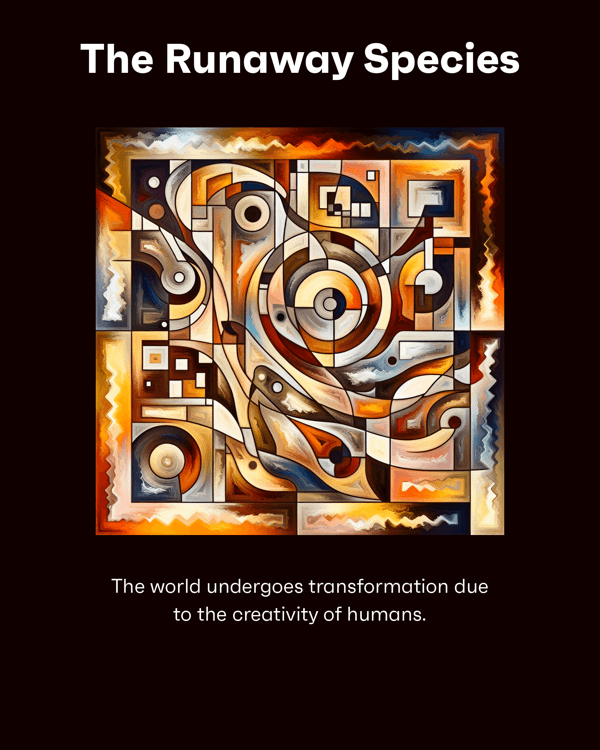
Anthony Brandt is an acclaimed composer and a professor of music at Rice University. His musical compositions include an oratorio and two chamber operas. David Eagleman is a neuroscientist at Stanford University and the internationally best-selling author of The Brain, Incognito, and other works.
Creativity thrives on foundational principles that prioritize experimentation and forward-thinking, whether in schools or workplaces. Organizations like Microsoft exemplify this by pursuing bold, unconventional ideas, such as cooling servers in the ocean. In education, fostering creativity involves teaching students to reshape the world, as demonstrated by art teacher Lindsay Esola, whose students evolve from copying her apple drawing to creating unique interpretations through experimentation. Creativity also relies on techniques like fragmentation, seen in Picasso’s *Guernica* and the evolution of cinema, where breaking and reassembling elements unlocks innovation. Even groundbreaking ideas, like the iPhone, build on past efforts, much like Coleridge drew inspiration from his library. This principle of reinvention extends to modification, as seen in advancements like artificial hearts or Harold Pinter’s reverse storytelling in *Betrayal*. When stuck, nature’s method of generating numerous imperfect variations offers a model for creativity, as George Washington Carver and Thomas Edison demonstrated through their prolific, albeit imperfect, ideas.
Um den Rest des Buches zu lesen, können Sie
Bitely herunterladen

 13 min
 6 Bite
 Einblick


 6 Bites