Nature & Science
The Omnivore's DilemmaThe Omnivore's Dilemma

The Omnivore's Dilemma

user-icon

Michael Pollan

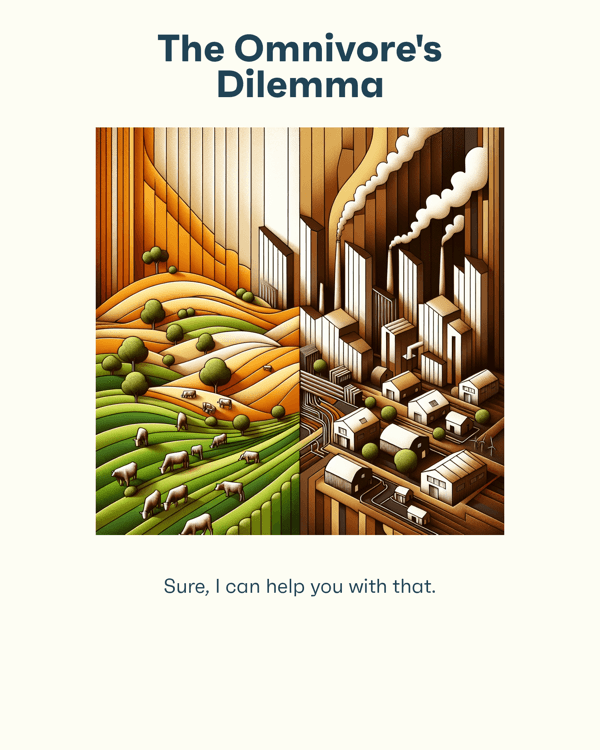
The image of a happy cow grazing on lush pastures evokes the charm of small, sustainable farms, but the reality of modern organic agriculture often falls short of this ideal. As demand for organic products surged, large-scale operations emerged, compromising the movement’s founding principles. Looser USDA standards now allow practices like overcrowded "free-range" sheds and the inclusion of highly processed items like "organic TV dinners," blurring the definition of organic. Meanwhile, industrial farming’s reliance on corn has led to environmental degradation, animal health issues, and the rise of CAFOs, where efficiency trumps ethics. Corn’s overproduction fuels a system that prioritizes cheap, processed foods, while sustainable alternatives like management-intensive grazing offer hope. Yet, the dominance of industrial methods has made food more accessible at the expense of environmental sustainability, animal welfare, and public health. The question remains: can small, local farms reclaim their role in a system increasingly driven by profit over principle?

clock12 min
bite9 Bite
target Einblick

Worum geht es?

This book delves into the hidden complexities of modern food production, unraveling the stark contrast between the idyllic imagery on organic labels and the industrial realities behind them. It explores how the pursuit of efficiency and profit has reshaped farming practices, often at the expense of ethics, sustainability, and public health. From the environmental toll of monoculture crops to the ethical dilemmas of factory farming, the narrative examines the far-reaching consequences of our food choices. Offering thought-provoking insights, it also highlights promising alternatives that prioritize ecological harmony, animal welfare, and community resilience.

Buchzusammenfassung

Michael Pollan is a food journalist, bestselling author and a professor of journalism at the University of California at Berkeley. His other books include The Omnivore’s Dilemma and In Defense of Food.

The image of a happy cow grazing on lush pastures evokes the charm of small, sustainable farms, but the reality of modern organic agriculture often falls short of this ideal. As demand for organic products surged, large-scale operations emerged, compromising the movement’s founding principles. Looser USDA standards now allow practices like overcrowded "free-range" sheds and the inclusion of highly processed items like "organic TV dinners," blurring the definition of organic. Meanwhile, industrial farming’s reliance on corn has led to environmental degradation, animal health issues, and the rise of CAFOs, where efficiency trumps ethics. Corn’s overproduction fuels a system that prioritizes cheap, processed foods, while sustainable alternatives like management-intensive grazing offer hope. Yet, the dominance of industrial methods has made food more accessible at the expense of environmental sustainability, animal welfare, and public health. The question remains: can small, local farms reclaim their role in a system increasingly driven by profit over principle?

Um den Rest des Buches zu lesen, können Sie Bitely herunterladen
appstoregoogleplayapp gallery
Alle Bissen
bite9 Bites

The Hidden Costs of Industrial Farming

1
logo

Corn’s Overproduction: Subsidies Fueling Surplus

2
logo

Corn’s Hidden Role in Modern Food

3
logo

Corn’s Hidden Role in Cheap Meat

4
logo

The Hidden Costs of Industrial Meat

5
logo

Organic Farming: A Healthier, Tastier Revolution

6
logo

Organic Illusions: The Hidden Cost of Scale

7
logo

Harnessing Grasslands: A Sustainable Farming Revolution

8
logo

Choosing Local Farms: A Path to Ethical Eating

9
logo

Verwandte Bücher

mailbox-icon

Möchten Sie weiter lernen?

Verpassen Sie keine Updates aus dem aufregenden Universum von Bitely!