Self-Growth
SmarterSmarter

Smarter

user-icon

Dan Hurley

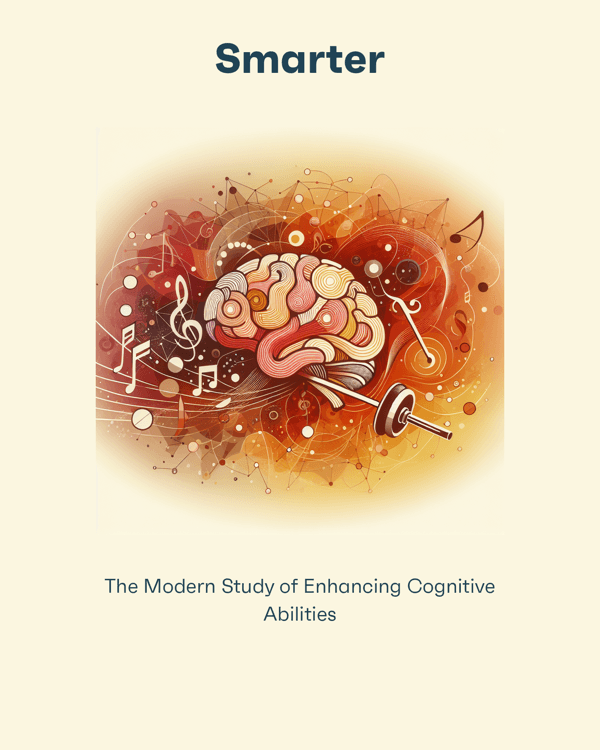
The relationship between physical fitness, cognitive performance, and intelligence enhancement has been a focus of research for decades, with studies showing that activities like resistance training and music education can yield measurable cognitive benefits. For example, Teresa Liu-Ambrose’s 2012 study highlighted resistance training’s positive effects on memory and attention, while Glenn Schellenberg’s 2004 research demonstrated IQ gains from music lessons, particularly voice training. Meanwhile, tools like IQ tests and fMRI scans offer complementary methods for measuring intelligence, though fluid intelligence remains challenging to quantify directly. Emerging brain-training programs, such as Lumosity’s N-Back game, show promise in improving working memory and fluid intelligence, though their real-world applications are debated. This ongoing exploration of intelligence enhancement, from exercise to cognitive games, underscores the complexity of understanding and improving human cognition—a topic that continues to evolve as research advances. The next section delves deeper into the mechanisms behind brain training and its broader implications.

clock7 min
bite5 Bite
target Einblick

Worum geht es?

This book delves into the fascinating ways physical activity, music education, and cognitive training can enhance intelligence, challenging long-held beliefs about the limits of mental growth. Drawing on decades of research, it explores the science behind fluid and crystallized intelligence, the role of brain structure, and the effectiveness of tools like brain games and exercise. With engaging studies and thought-provoking insights, it examines how lifestyle choices and emerging technologies shape our cognitive potential. Perfect for curious minds, it invites readers to rethink what intelligence truly means and how it can evolve.

Buchzusammenfassung

Dan Hurley is an award-winning science journalist. He has written nearly twenty-four articles for the the New York Times Magazine since 2005, including “Can You Make Yourself Smarter?” one of the most read articles in 2012.

The relationship between physical fitness, cognitive performance, and intelligence enhancement has been a focus of research for decades, with studies showing that activities like resistance training and music education can yield measurable cognitive benefits. For example, Teresa Liu-Ambrose’s 2012 study highlighted resistance training’s positive effects on memory and attention, while Glenn Schellenberg’s 2004 research demonstrated IQ gains from music lessons, particularly voice training. Meanwhile, tools like IQ tests and fMRI scans offer complementary methods for measuring intelligence, though fluid intelligence remains challenging to quantify directly. Emerging brain-training programs, such as Lumosity’s N-Back game, show promise in improving working memory and fluid intelligence, though their real-world applications are debated. This ongoing exploration of intelligence enhancement, from exercise to cognitive games, underscores the complexity of understanding and improving human cognition—a topic that continues to evolve as research advances. The next section delves deeper into the mechanisms behind brain training and its broader implications.

Um den Rest des Buches zu lesen, können Sie Bitely herunterladen
appstoregoogleplayapp gallery
Alle Bissen
bite5 Bites

Unlocking the Secrets of Human Intelligence

1
logo

Unlocking Intelligence: The Science Behind Brainpower

2
logo

Boosting Brainpower: How Games and Exercise Help

3
logo

Boosting Brainpower: Exercise, Music, and Science

4
logo

Unlocking Intelligence: The Science of Brain Training

5
logo

Verwandte Bücher

mailbox-icon

Möchten Sie weiter lernen?

Verpassen Sie keine Updates aus dem aufregenden Universum von Bitely!