
Psychology
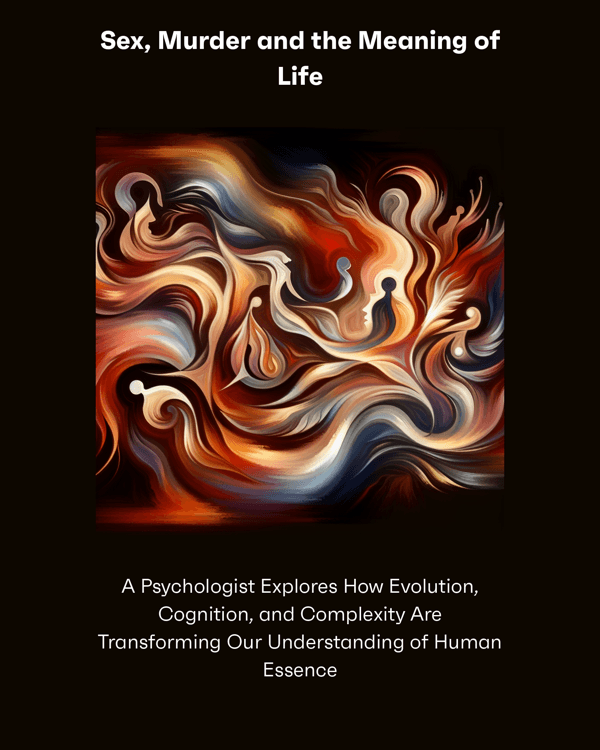
Sex, Murder and the Meaning of LifeSex, Murder and the Meaning of Life

Sex, Murder and the Meaning of Life

user-icon

Douglas T. Kenrick

Our brains are selective in what they retain, prioritizing memories tied to survival and reproduction, such as moments of danger or significant emotional milestones like a first kiss. This evolutionary focus also explains behaviors like being drawn to attractive or socially dominant individuals, which can weaken commitment in relationships, or the tendency to value luxury items as signals of status and desirability. Similarly, violence and competition for dominance often stem from the drive to secure reproductive success, as seen in the disproportionate involvement of men in homicides. Biases, too, are rooted in survival instincts, influencing how we perceive and remember those outside our social groups, often as threats. These patterns, shaped by our evolutionary past, continue to impact modern behavior, from romantic choices to consumer habits and social prejudices, revealing the deep-seated instincts that guide human interactions.

clock9 min
bite5 Bite
target Einblick

Worum geht es?

This book delves into the fascinating ways our evolutionary past shapes modern human behavior, from memory retention and attraction to violence and prejudice. Through engaging anecdotes and cutting-edge research, it explores why certain moments become unforgettable, how primal instincts influence relationships, and the deep-seated drives behind consumerism and social dominance. By connecting ancient survival mechanisms to contemporary actions, the book offers a thought-provoking look at the hidden forces guiding our everyday decisions.

Buchzusammenfassung

Douglas T. Kenrick is a professor of psychology at Arizona State University. His contributions to psychology and social research have been published in numerous academic journals, as well as in The New York Times and Psychology Today.

Our brains are selective in what they retain, prioritizing memories tied to survival and reproduction, such as moments of danger or significant emotional milestones like a first kiss. This evolutionary focus also explains behaviors like being drawn to attractive or socially dominant individuals, which can weaken commitment in relationships, or the tendency to value luxury items as signals of status and desirability. Similarly, violence and competition for dominance often stem from the drive to secure reproductive success, as seen in the disproportionate involvement of men in homicides. Biases, too, are rooted in survival instincts, influencing how we perceive and remember those outside our social groups, often as threats. These patterns, shaped by our evolutionary past, continue to impact modern behavior, from romantic choices to consumer habits and social prejudices, revealing the deep-seated instincts that guide human interactions.

Um den Rest des Buches zu lesen, können Sie Bitely herunterladen
appstoregoogleplayapp gallery
Alle Bissen
bite5 Bites

Attraction, Commitment, and the Evolutionary Pull

1
logo

Dark Impulses and the Evolution of Violence

2
logo

How Evolution Shapes Bias and Memory

3
logo

Why We Remember What Truly Matters

4
logo

Wealth, Status, and the Evolution of Desire

5
logo

Verwandte Bücher

mailbox-icon

Möchten Sie weiter lernen?

Verpassen Sie keine Updates aus dem aufregenden Universum von Bitely!