Buchzusammenfassung
Robert B. Reich is the Chancellor’s Professor of Public Policy at the University of California at Berkeley. Prior to this, he served in three presidential administrations, most recently as labor secretary under former US President Bill Clinton.
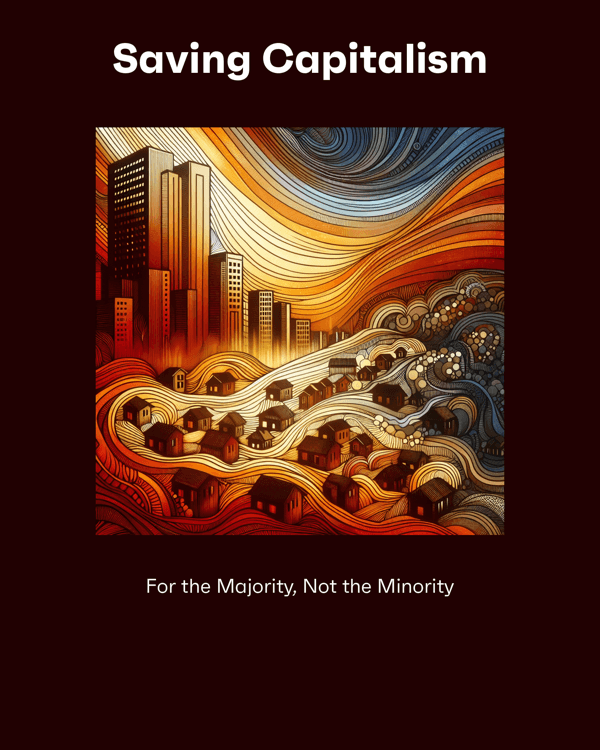
The decline of union power and the rise of corporate dominance have weakened the American middle class’s ability to negotiate fair wages, contributing to a broader erosion of its economic and political influence. Wealth and income are now highly concentrated, with the wealthiest Americans controlling a disproportionate share of assets, while the preferences of average citizens have little impact on policy decisions. This growing inequality threatens economic stability, as reduced purchasing power undermines the economy and fosters distrust in market regulations. Politically, extreme wealth concentration risks unrest, as seen in historical populist movements. Despite these challenges, capitalism can be reformed to address these disparities. By redefining property rights, enforcing antitrust laws, and restructuring corporate practices, a more equitable system can emerge. Additionally, empowering the middle class through higher wages, stronger unions, and political reforms—such as campaign finance changes and the creation of a third party—could restore balance. Without such measures, both the economy and democracy face significant risks.
Um den Rest des Buches zu lesen, können Sie
Bitely herunterladen








 12 min
 7 Bite
 Einblick
 7 Bites