Buchzusammenfassung
Dr. Nick Lane studied biochemistry at Imperial College London and is an Honorary Reader at University College London. He is the author of Power, Sex, Suicide: Mitochondria and the Meaning of Life and Life Ascending: The Ten Great Inventions of Evolution.
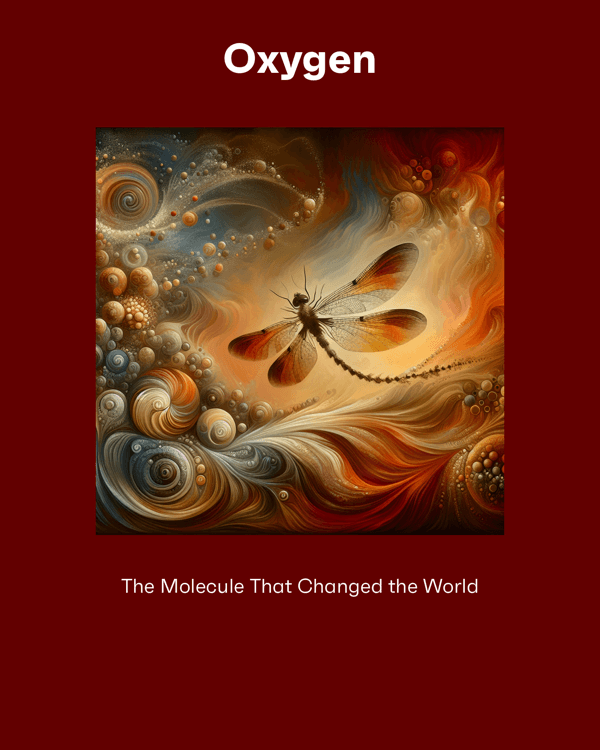
In 1979, the discovery of a massive fossilized dragonfly in Bolsover highlighted the extraordinary sizes of Carboniferous-era creatures, likely enabled by an oxygen-rich atmosphere. Scientists found that higher oxygen levels allowed these creatures, including giant mayflies and scorpions, to thrive and move efficiently. By analyzing buried organic material, researchers estimated that oxygen made up 35% of the atmosphere during this period. While oxygen was initially toxic to early life, it may have driven the evolution of multicellular organisms as cells clustered to mitigate its effects. This rise in oxygen also set the stage for the Cambrian explosion, a rapid emergence of diverse life forms. Photosynthesis played a pivotal role in increasing atmospheric oxygen, stabilizing Earth's water supply, and enabling complex life, though oxygen remained dangerous to simpler organisms. Over time, life developed antioxidants and other defenses against oxygen toxicity, which continues to influence aging and lifespan. The relationship between oxygen, respiration, and toxin production suggests that lifespan may be tied to the rate of oxidative damage rather than metabolic rate alone. Oxygen’s dual role as both a life-sustaining and potentially harmful element underscores its profound impact on evolution, aging, and survival, shaping life on Earth in countless ways.
Um den Rest des Buches zu lesen, können Sie
Bitely herunterladen








 11 min
 7 Bite
 Einblick
 7 Bites