Biography & History
On PaperOn Paper

On Paper

user-icon

Nicholas A. Basbanes

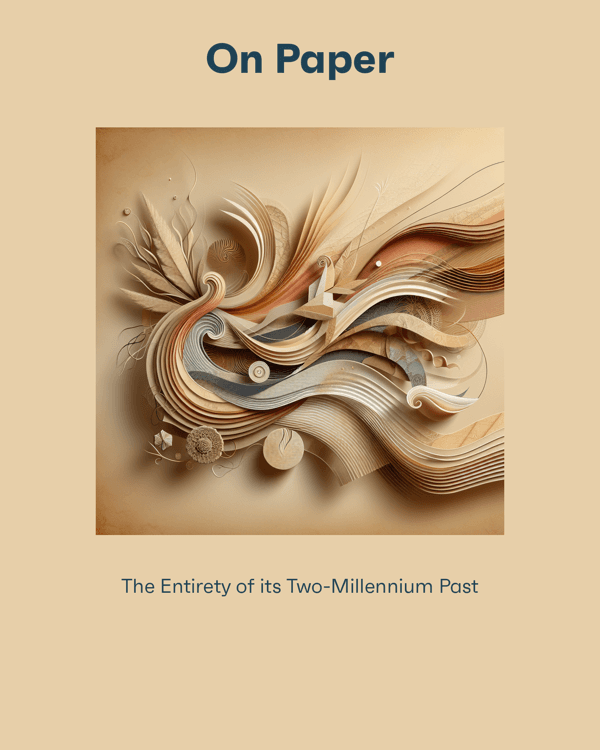
Paper, a material we often take for granted, has profoundly shaped human history. Its origins trace back to China, where Cai Lun is credited with its invention in AD 105, though earlier fragments suggest it existed as far back as 140 BC. Made by combining water with cellulose fibers from diverse sources like tree bark, fabric, or hemp, paper is distinct from papyrus, which relies on natural plant adhesives. Its adaptability made it invaluable, spreading from China to Japan, where it became integral to daily life and even warfare. Over centuries, paper revolutionized industries, from hygiene products like toilet paper and sanitary pads to innovations in printing and currency. Companies like Kimberly-Clark and Crane and Company advanced its applications, from disposable tissues to durable banknotes. Despite the rise of digital media, paper remains essential in areas like documentation, architecture, and espionage, while its recyclability and cultural significance endure. From artistic sketches to global trade, paper’s evolution—from wood pulp innovations to mass production—reflects its enduring impact on society.

clock13 min
bite8 Bite
target Einblick

Worum geht es?

Paper is one of humanity’s most transformative inventions, shaping cultures, industries, and daily life for centuries. From its origins in ancient China to its global spread through trade and innovation, paper has evolved into an indispensable material. This book explores its fascinating journey—how it revolutionized communication, hygiene, architecture, and even warfare—while uncovering the ingenuity behind its production and diverse applications. Through captivating stories and historical insights, it reveals the enduring significance of paper in a world increasingly defined by the digital age.

Buchzusammenfassung

Nicholas Basbanes is a former literary editor of the Worcester Sunday Telegram. He’s written several books, including A Gentle Madness: Bibliophiles, Bibliomanes, and the Eternal Passion for Books, and his work has been featured in the New York Times and the Los Angeles Times.

Paper, a material we often take for granted, has profoundly shaped human history. Its origins trace back to China, where Cai Lun is credited with its invention in AD 105, though earlier fragments suggest it existed as far back as 140 BC. Made by combining water with cellulose fibers from diverse sources like tree bark, fabric, or hemp, paper is distinct from papyrus, which relies on natural plant adhesives. Its adaptability made it invaluable, spreading from China to Japan, where it became integral to daily life and even warfare. Over centuries, paper revolutionized industries, from hygiene products like toilet paper and sanitary pads to innovations in printing and currency. Companies like Kimberly-Clark and Crane and Company advanced its applications, from disposable tissues to durable banknotes. Despite the rise of digital media, paper remains essential in areas like documentation, architecture, and espionage, while its recyclability and cultural significance endure. From artistic sketches to global trade, paper’s evolution—from wood pulp innovations to mass production—reflects its enduring impact on society.

Um den Rest des Buches zu lesen, können Sie Bitely herunterladen
appstoregoogleplayapp gallery
Alle Bissen
bite8 Bites

Paper’s Journey: From Ancient Craft to Global Impact

1
logo

Paper's Journey: From Luxury to Innovation

2
logo

Paper’s Journey: From Sacred Scrolls to Global Innovation

3
logo

Silk-Threaded Currency: The Art of Durability

4
logo

From Rags to Wood: The Evolution of Paper

5
logo

Paper's Hidden Legacy: Hygiene and Innovation

6
logo

Paper's Hidden Roles: From Passports to Cigarettes

7
logo

Paper’s Enduring Legacy: From Art to Architecture

8
logo

Verwandte Bücher

mailbox-icon

Möchten Sie weiter lernen?

Verpassen Sie keine Updates aus dem aufregenden Universum von Bitely!