Leadership & Entrepreneurship
On Grand StrategyOn Grand Strategy

On Grand Strategy

user-icon

John Lewis Gaddis

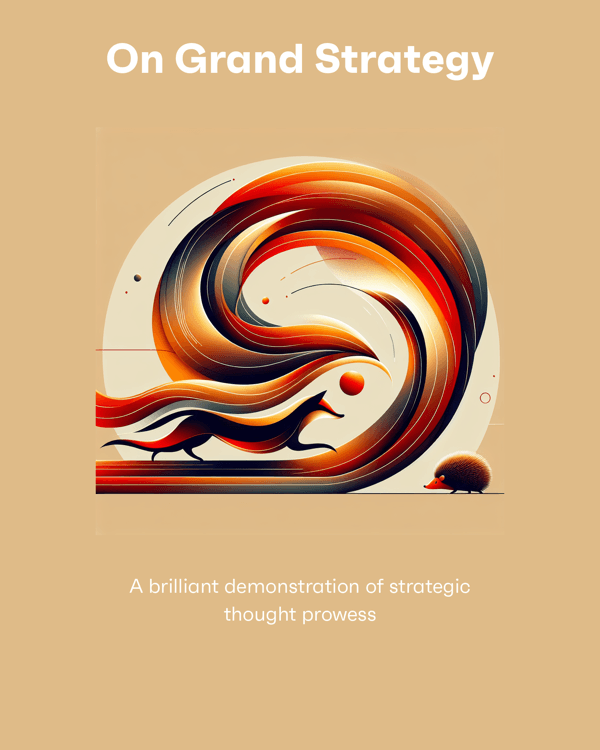
Isaiah Berlin’s fox-hedgehog analogy offers a compelling lens through which to examine leadership, emphasizing the importance of balancing adaptability and focus. Historical examples, from World War I to the leadership of Franklin D. Roosevelt, demonstrate the dangers of prioritizing short-term gains or rigid strategies without considering long-term consequences. Leaders like Lincoln and Octavian exemplify the power of blending determination with resourcefulness, while figures such as Napoleon highlight the perils of hubris and overconfidence. Philip E. Tetlock’s study on expert predictions further underscores the value of flexibility and humility, traits that foxes embody, over the oversimplifications of hedgehogs. This balance is also evident in governance, as seen in the adaptability of British colonial leadership compared to the rigidity of Spanish rule, which left lasting impacts on the Americas. Ultimately, effective leadership requires a nuanced approach that integrates foresight, adaptability, and decisive action.

clock12 min
bite5 Bite
target Einblick

Worum geht es?

Isaiah Berlin’s timeless analogy of the fox and the hedgehog serves as the foundation for this exploration of leadership, strategy, and decision-making. By examining historical figures and events, the narrative delves into the balance between adaptability and focus, caution and boldness, and short-term gains versus long-term vision. Through vivid examples—from Franklin D. Roosevelt’s strategic foresight to Napoleon’s hubris—the text reveals how the most effective leaders blend diverse traits to navigate complex challenges. This engaging analysis offers a fresh perspective on leadership, history, and the enduring relevance of Berlin’s metaphor.

Buchzusammenfassung

John Lewis Gaddis is a history professor at Yale University, where he’s been teaching a course on military and naval history for over 15 years. He’s also an esteemed writer of the books The Cold War: A New History (2005) and George F. Kennan: An American Life (2011), for which he earned a Pulitzer Prize.

Isaiah Berlin’s fox-hedgehog analogy offers a compelling lens through which to examine leadership, emphasizing the importance of balancing adaptability and focus. Historical examples, from World War I to the leadership of Franklin D. Roosevelt, demonstrate the dangers of prioritizing short-term gains or rigid strategies without considering long-term consequences. Leaders like Lincoln and Octavian exemplify the power of blending determination with resourcefulness, while figures such as Napoleon highlight the perils of hubris and overconfidence. Philip E. Tetlock’s study on expert predictions further underscores the value of flexibility and humility, traits that foxes embody, over the oversimplifications of hedgehogs. This balance is also evident in governance, as seen in the adaptability of British colonial leadership compared to the rigidity of Spanish rule, which left lasting impacts on the Americas. Ultimately, effective leadership requires a nuanced approach that integrates foresight, adaptability, and decisive action.

Um den Rest des Buches zu lesen, können Sie Bitely herunterladen

appstoregoogleplayapp gallery
Alle Bissen
bite5 Bites

Balancing Bold Vision with Strategic Caution

1
logo

Mastering Complexity: The Fox vs. Hedgehog Debate

2
logo

Mastering Leadership: Balancing Vision and Strategy

3
logo

Adaptive Leadership: The Key to Resilience

4
logo

Balancing Strategy: Lessons from History's Leaders

5
logo

Verwandte Bücher

mailbox-icon

Möchten Sie weiter lernen?

Verpassen Sie keine Updates aus dem aufregenden Universum von Bitely!