Buchzusammenfassung
Salman Rushdie is an Indian-born British-American writer. He is the author of fifteen major novels including The Satanic Verses, Quichotte, and Midnight’s Children. The latter won both the Booker Prize and the Best of the Booker. Rushdie is a former president of PEN American Center. He was knighted in 2007 for services to literature.
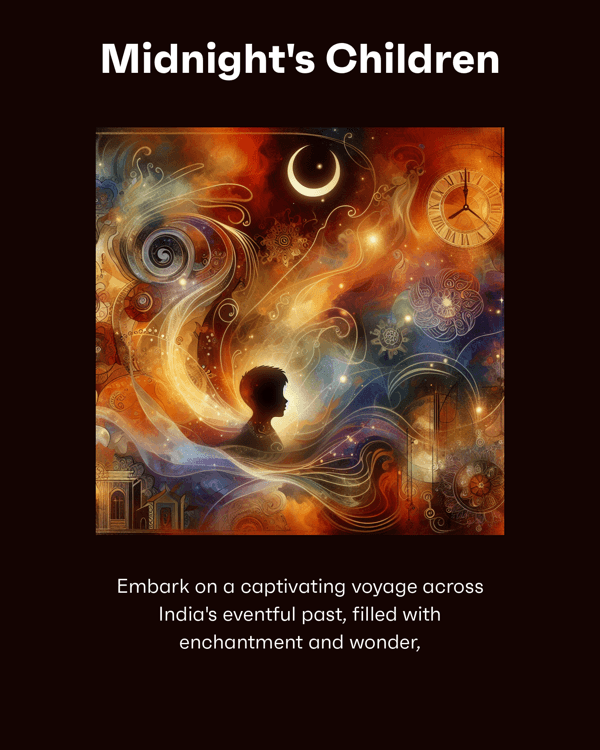
Saleem Sinai’s story spans the vast Indian subcontinent, intertwining his personal journey with the history of a newly independent India. Beginning in 1915 with his grandfather Aadam Aziz’s rejection of faith in Kashmir, the narrative leaps to August 14, 1947, when Saleem is born at the exact moment of India’s independence, unknowingly swapped at birth with another boy, Shiva. Saleem grows up in privilege, while Shiva endures hardship, their lives shaped by this secret exchange. Saleem later discovers he is one of 1,001 “midnight’s children,” each born in the first hour of independence with unique powers, his being telepathy. By 1960, he connects with the others, forming the Midnight Children’s Conference, but ideological differences with Shiva lead to its dissolution by 1963, reflecting India’s post-independence struggles. Saleem’s life mirrors the nation’s tumultuous path, marked by his family’s financial collapse, relocation to Pakistan, and his transformation from telepath to possessing an extraordinary sense of smell. Enlisting in the army, he faces the horrors of war and political betrayal, ultimately finding solace in love with Padma amidst chaos. By 1977, frail and near death, Saleem recounts his tale, burdened by expectations as India’s symbolic first-born, yet still seeking the greater purpose of his extraordinary life.
Um den Rest des Buches zu lesen, können Sie
Bitely herunterladen

 8 min
8 min 4 Bite
 Einblick


 4 Bites