Buchzusammenfassung
Michelle R. Weise, PhD, is the vice-chancellor of strategy and innovation at National University System. Previously, she was a senior advisor at Imaginable Futures, a philanthropic investment firm, and chief innovation officer at both Strada Education Network and Southern New Hampshire University. She was one of 30 management and leadership thinkers on Thinkers50’s list of people to watch in 2021.
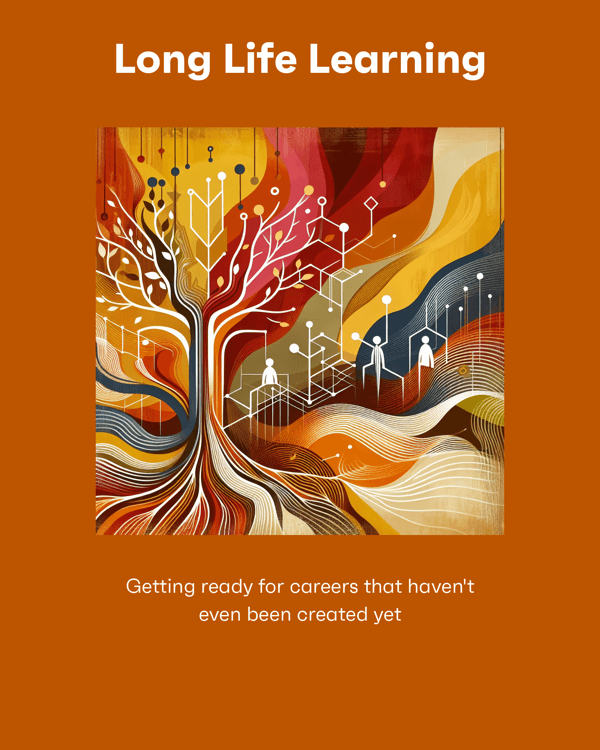
Jaylen’s story highlights the urgent need for flexible, tailored education programs that address the specific skill gaps of adult learners without requiring excessive time or financial commitments. Traditional degree paths often prove inefficient for experienced workers, while modular, problem-based learning and on-ramps—specialized programs developed with employers—offer more practical solutions. However, these initiatives currently reach only a fraction of the population in need. Similarly, academia must adapt to prioritize workforce readiness, as most students seek education to secure employment but often graduate feeling unprepared. Disruptive innovations, such as modularized learning, could bridge this gap by offering flexible, skills-focused alternatives. Meanwhile, the job market suffers from inefficiencies like credential inflation, which places unnecessary barriers on applicants. Shifting to skills-based hiring, as demonstrated by The Body Shop’s open-hiring model, could streamline processes and reduce biases. To navigate education and employment pathways effectively, individuals need better guidance, with AI tools offering potential solutions for mapping skills to career opportunities. Finally, integrating education and workforce systems requires robust, interconnected data networks, akin to nature’s Pando tree system, to foster collaboration and shared growth across sectors.
Um den Rest des Buches zu lesen, können Sie
Bitely herunterladen








 16 min
 8 Bite
 Einblick
 8 Bites