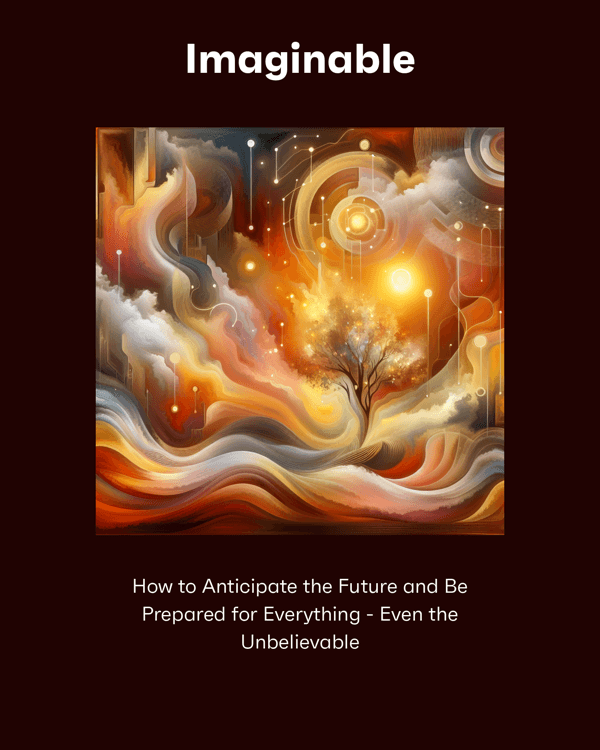
Buchzusammenfassung
Jane McGonigal is a future forecaster, reality game designer, and the director of games research and development at the Institute for the Future. She’s written two New York Times best sellers, Reality Is Broken and SuperBetter, and teaches a course on “How to Think Like a Futurist” at Stanford University. Her TED talks on how gaming can improve lives and solve actual problems have been viewed more than 15 million times.
In 2010, McGonigal created EVOKE, a simulation game set in 2020, where 20,000 players envisioned their responses to global crises like pandemics, misinformation, and extreme weather. Drawing from expert-predicted future forces, the game mirrored real events of 2020, emphasizing the importance of recognizing signals of change, such as the pizzly bear, to anticipate societal shifts. McGonigal highlights the value of balancing shadow and positive imagination to foster "urgent optimism," a mindset that combines realistic awareness of challenges with confidence in overcoming them. Video games, by promoting resilience and problem-solving, serve as tools for building learned helpfulness and preparing for future scenarios. Exercises like episodic future thinking (EFT) help individuals vividly simulate and emotionally connect with their future selves, fostering empathy and long-term planning. A decade, often seen as a meaningful unit of transformation, allows for time spaciousness, encouraging methodical progress toward goals. Through imaginative exercises, such as envisioning a zero-waste society in 2032, individuals can explore potential futures, adapt behaviors, and prepare for transformative changes with hope and confidence.
Um den Rest des Buches zu lesen, können Sie
Bitely herunterladen








 15 min
 6 Bite
 Einblick
 6 Bites