
Mindfulness & Happiness
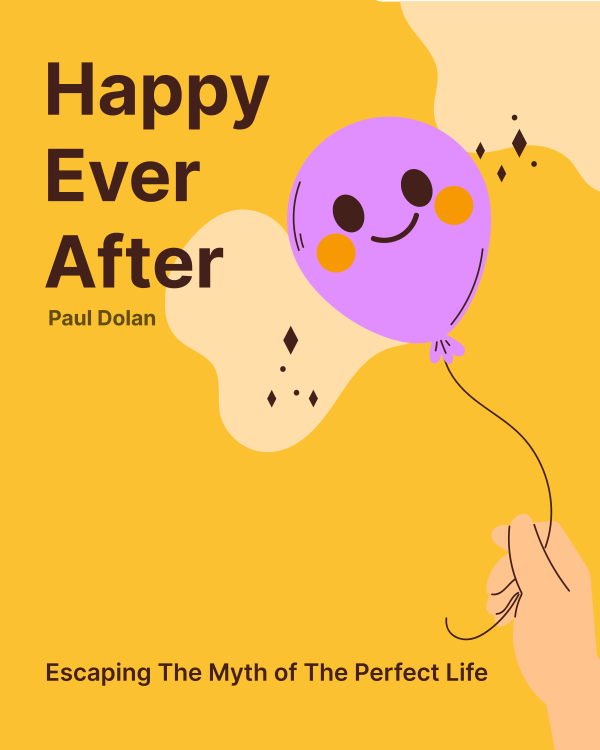
Happy Ever AfterHappy Ever After
Happy Ever After

Happy Ever After

user-icon

Paul Dolan

Society believes we should earn a high income, have a family, and maintain a healthy lifestyle. However, blindly fulfilling them can lead to unhappiness. Instead, focusing on your true passions and refusing to conform to society will make you happier for the rest of your life. As you make decisions in your own life, consider what you would want for your friends. Social narratives can be powerful influences. Therefore, consider your decisions in life as if they were the decisions of a close friend. For example, what would you prefer if your best friend had a choice between a miserable marriage and a single happy life? It is possible to achieve happiness by thinking this way instead of doing what society demands.

hashtagself-help
hashtagpersonal-development
hashtagpsychology
hashtagsocial-life
clock16 min
bite7 Bite
target Einblick

Worum geht es?

In Happy Ever After (2018), we are encouraged to think about how social narratives shape our lives. The book makes us understand that many of the opinions we hold without thinking, such as the belief that we should work diligently and make more money or the aspiration to marry and have kids, may not lead to happiness. In addition, it suggests that each of us should discover a way to enjoy life truly.

Buchzusammenfassung

Paul Dolan is a British economist and professor known for his work in the fields of behavioral science, public policy, and well-being. He has made significant contributions to the study of happiness, well-being, and the factors that influence human decision-making.

Society believes we should earn a high income, have a family, and maintain a healthy lifestyle. However, blindly fulfilling them can lead to unhappiness. Instead, focusing on your true passions and refusing to conform to society will make you happier for the rest of your life. As you make decisions in your own life, consider what you would want for your friends. Social narratives can be powerful influences. Therefore, consider your decisions in life as if they were the decisions of a close friend. For example, what would you prefer if your best friend had a choice between a miserable marriage and a single happy life? It is possible to achieve happiness by thinking this way instead of doing what society demands.

“Change what you do, not how you think. You are what you do, your happiness is what you attend to, and you should attend to what makes you and those whom you care about happy.”

“Being too hard on ourselves, and not accepting the fact that we procrastinate, just leads to more procrastination and makes it harder to change."

“Optimism research teaches us that we should expect the best and have a contingency plan for the worst.”

Um den Rest des Buches zu lesen, können Sie Bitely herunterladen
appstoregoogleplayapp gallery
Alle Bissen
bite7 Bites

Getting richer does not necessarily lead to happiness.

1
logo

Many highly successful people aren't really happy and would benefit from settling for less.

2
logo

The evidence does not support the claim that marriage brings happiness.

3
logo

Opposing infidelity rigidly does not lead to happiness.

4
logo

Although parenthood often leads to considerable stress, worry, and unhappiness, society endorses it.

5
logo

A healthy lifestyle is often overvalued.

6
logo

The concept of free will distorts our worldview.

7
logo

Verwandte Bücher

mailbox-icon

Möchten Sie weiter lernen?

Verpassen Sie keine Updates aus dem aufregenden Universum von Bitely!