Biography & History
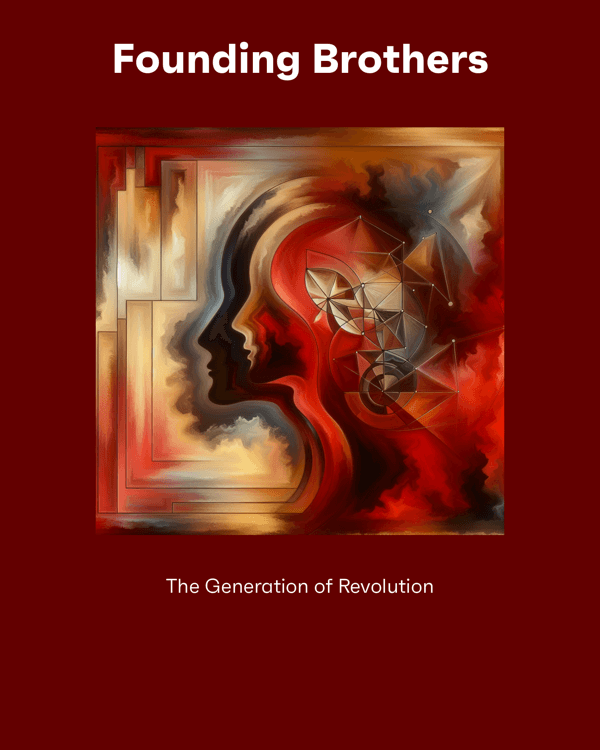
Founding BrothersFounding Brothers

Founding Brothers

user-icon

Joseph J. Ellis

The Declaration of Independence in 1776 proclaimed equality and unalienable rights for all, yet entrenched institutions like slavery persisted, contradicting these ideals. Benjamin Franklin, a revolutionary leader and advocate for justice, condemned slavery as incompatible with the republic’s principles, making his final political act in 1790 a petition to Congress for its abolition. Meanwhile, the young nation faced internal conflicts, such as the 1790 Compromise brokered by Thomas Jefferson, resolving disputes between Hamilton and Madison over state debts and the capital’s location. Hamilton’s federalist vision sought economic unity through centralized debt assumption, clashing with Madison’s fears of overreach. The founders, inspired by republicanism and virtue, navigated uncharted governance challenges, often diverging in their approaches. Figures like Jefferson and Hamilton embodied contrasting ideals, from generational sovereignty to industrial federalism. The republic’s survival depended on citizen virtue, as corruption and self-interest threatened its stability. Franklin’s anti-slavery stance exposed the nation’s moral contradictions, with compromises like the Constitution’s silence on slavery delaying resolution. Ultimately, the issue culminated in a devastating civil war, ending slavery but at a tremendous cost.

clock9 min
bite7 Bite
target Einblick

Worum geht es?

The book delves into the profound struggles and triumphs that shaped the United States, exploring themes of equality, liberty, and the pursuit of justice. Through vivid accounts of pivotal figures like Benjamin Franklin, Thomas Jefferson, and Alexander Hamilton, it examines the tension between revolutionary ideals and the entrenched systems that resisted change. From the fight against slavery to the compromises that defined the nation’s early years, the narrative highlights the complexities of forging a republic rooted in virtue and self-governance. This is a compelling exploration of how bold ideas and human flaws intertwined to shape a nation's destiny.

Buchzusammenfassung

Joseph J. Ellis is Ford Foundation Professor of History at Mount Holyoke. Ellis, a specialist in American history, is the author of several award-winning books, including American Sphinx, a study of Thomas Jefferson, and The Passionate Sage, a study of John Adams.

The Declaration of Independence in 1776 proclaimed equality and unalienable rights for all, yet entrenched institutions like slavery persisted, contradicting these ideals. Benjamin Franklin, a revolutionary leader and advocate for justice, condemned slavery as incompatible with the republic’s principles, making his final political act in 1790 a petition to Congress for its abolition. Meanwhile, the young nation faced internal conflicts, such as the 1790 Compromise brokered by Thomas Jefferson, resolving disputes between Hamilton and Madison over state debts and the capital’s location. Hamilton’s federalist vision sought economic unity through centralized debt assumption, clashing with Madison’s fears of overreach. The founders, inspired by republicanism and virtue, navigated uncharted governance challenges, often diverging in their approaches. Figures like Jefferson and Hamilton embodied contrasting ideals, from generational sovereignty to industrial federalism. The republic’s survival depended on citizen virtue, as corruption and self-interest threatened its stability. Franklin’s anti-slavery stance exposed the nation’s moral contradictions, with compromises like the Constitution’s silence on slavery delaying resolution. Ultimately, the issue culminated in a devastating civil war, ending slavery but at a tremendous cost.

Um den Rest des Buches zu lesen, können Sie Bitely herunterladen
appstoregoogleplayapp gallery
Alle Bissen
bite7 Bites

Forging Freedom: The Revolutionary Pursuit of Virtue

1
logo

Virtue as the Lifeblood of Republics

2
logo

Forging a Nation: Visionaries of an Uncertain Republic

3
logo

Hamilton's Gamble: Turning Debt Into Unity

4
logo

Bridging Divides: Jefferson and the 1790 Compromise

5
logo

Benjamin Franklin’s Final Stand for Equality

6
logo

Franklin’s Final Stand Against Slavery

7
logo

Verwandte Bücher

mailbox-icon

Möchten Sie weiter lernen?

Verpassen Sie keine Updates aus dem aufregenden Universum von Bitely!