
Psychology
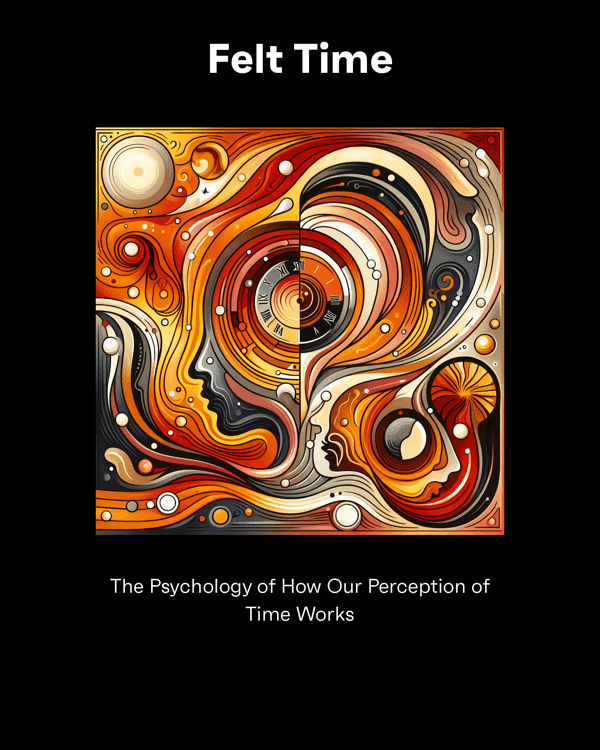
Felt TimeFelt Time

Felt Time

user-icon

Marc Wittmann

Faced with choices like enjoying a single slice of pizza now or waiting for two later, humans uniquely excel at delaying gratification compared to other animals, a skill with profound implications for success. Studies, such as Walter Mischel's marshmallow experiment, reveal that those who resist immediate rewards often achieve greater life outcomes. Our perception of time, shaped by psychological and physiological clocks, further influences how we experience and remember events. While short-term memory links fleeting moments into cohesive narratives, our circadian rhythm governs daily cognitive peaks and lows. Subjective time varies among individuals, as demonstrated by experiments on event perception and the disparity between lived and recalled experiences. In today’s fast-paced world, managing stress through tools like mindfulness, clear work-life boundaries, and intentional relaxation can enhance well-being. Interestingly, how we perceive time shifts based on novelty and routine, with active, engaging moments feeling longer in memory but shorter in the present, while mundane stretches seem endless in the moment yet fleeting in hindsight.

clock9 min
bite6 Bite
target Einblick

Worum geht es?

This book delves into the fascinating ways humans perceive and manage time, exploring themes like delayed gratification, memory, and the psychological and biological mechanisms that shape our sense of time. Through engaging examples—from marshmallow experiments to the rhythms of poetry—it examines how our brains process fleeting moments and transform them into lasting memories. It also offers insights into how subjective experiences, such as stress or novelty, alter our perception of time’s passage. Blending scientific research with relatable scenarios, this work uncovers the intricate relationship between time, behavior, and well-being.

Buchzusammenfassung

Marc Wittmann is a German psychologist conducting research at the Institute for Frontier Areas of Psychology and Mental Health.

Faced with choices like enjoying a single slice of pizza now or waiting for two later, humans uniquely excel at delaying gratification compared to other animals, a skill with profound implications for success. Studies, such as Walter Mischel's marshmallow experiment, reveal that those who resist immediate rewards often achieve greater life outcomes. Our perception of time, shaped by psychological and physiological clocks, further influences how we experience and remember events. While short-term memory links fleeting moments into cohesive narratives, our circadian rhythm governs daily cognitive peaks and lows. Subjective time varies among individuals, as demonstrated by experiments on event perception and the disparity between lived and recalled experiences. In today’s fast-paced world, managing stress through tools like mindfulness, clear work-life boundaries, and intentional relaxation can enhance well-being. Interestingly, how we perceive time shifts based on novelty and routine, with active, engaging moments feeling longer in memory but shorter in the present, while mundane stretches seem endless in the moment yet fleeting in hindsight.

Um den Rest des Buches zu lesen, können Sie Bitely herunterladen
appstoregoogleplayapp gallery
Alle Bissen
bite6 Bites

Unlocking Time: The Clocks Within Us

1
logo

Mastering the Art of Delayed Gratification

2
logo

Decoding Time: How Moments Shape Memory

3
logo

Why Time Feels Different for Everyone

4
logo

How Memory and Experience Shape Time

5
logo

Mastering Time and Balance in a Busy World

6
logo

Verwandte Bücher

mailbox-icon

Möchten Sie weiter lernen?

Verpassen Sie keine Updates aus dem aufregenden Universum von Bitely!