Buchzusammenfassung
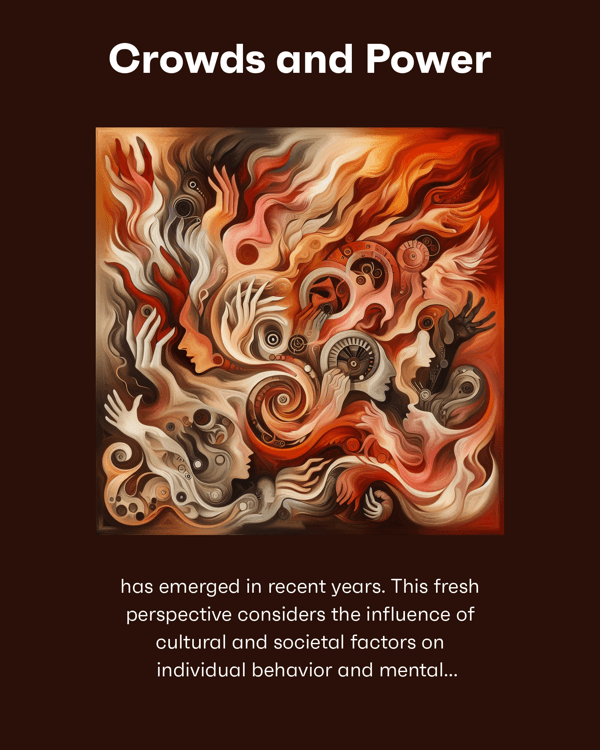
Elias Canetti (1905-1994) was a German-language novelist, sociologist, memoirist and playwright. Born in Bulgaria, Canetti moved to Austria with his family before fleeing Nazi persecution and settling in England. His best known works include the novels Auto-Da-Fè and The Human Province; his memoir, The Torch in My Ear; and his sociological study, Crowds and Power. Canetti received the Nobel Prize for Literature in 1981 for his unique achievements as a writer.
The exploration of groups and dominance transitions into a deeper examination of power, defined as the threat of coercion that extends beyond immediate force, spanning space and time. Power originates in primal acts like seizing, slaying, and consuming, symbolized by hands, fingers, and teeth, with consumption often signifying dominance. Crowds, distinct from earlier packs, form through shared identification and equality, dissolving once their goal is achieved. Nations, rooted in crowd dynamics, rely on symbols to foster unity, with each nation embracing unique emblems. Religion, too, reflects group behaviors, particularly through rituals of mourning, as seen in Shia Islam and Christianity. Power transcends strength, intertwining with survival, manipulation, and transformation, as illustrated in myths, nature, and human behavior. Commands, rooted in external authority, evolved from life-threatening imperatives to incentives like sustenance, though the military retains their original rigidity. Authority manifests through body language and control over time, with historical figures exemplifying how mastery of time reinforces dominance.
Um den Rest des Buches zu lesen, können Sie
Bitely herunterladen








 18 min
 10 Bite
 Einblick
 10 Bites