
Nature & Science
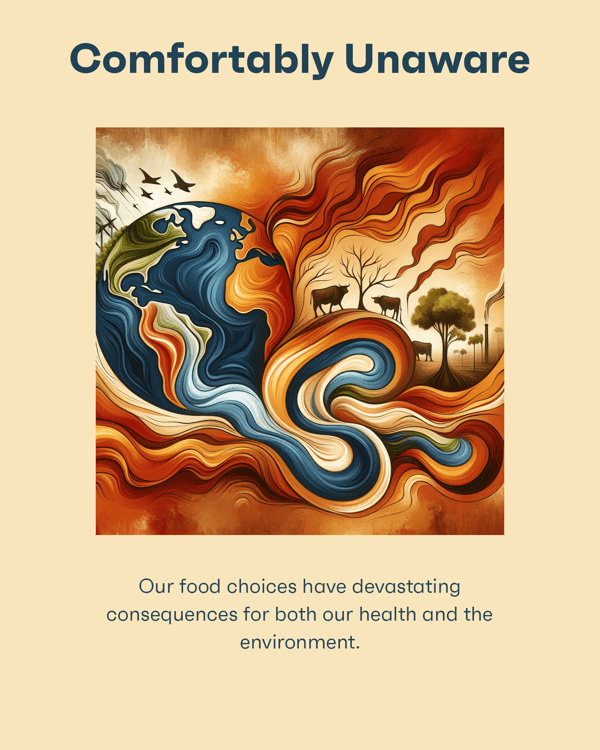
Comfortably UnawareComfortably Unaware

Comfortably Unaware

user-icon

Richard A. Oppenlander

Reducing meat consumption is just one step toward sustainability; addressing the environmental toll of seafood consumption is equally critical. Overfishing, driven by unregulated practices like bottom trawling, devastates marine ecosystems, with 70% of fish species overfished or depleted and countless others discarded as bycatch. Similarly, livestock farming strains freshwater resources, requiring thousands of gallons of water per pound of meat while contributing to global hunger by diverting grain from human consumption. This industry also drives deforestation, with rainforests—vital for oxygen production and biodiversity—cleared for cattle farming, resulting in the loss of species with potential health benefits. Furthermore, livestock and fish farming are major polluters, contaminating water and air with waste, chemicals, and greenhouse gases that exacerbate global warming. To mitigate these impacts, we must critically evaluate the ecological consequences of our dietary choices.

clock9 min
bite6 Bite
target Einblick

Worum geht es?

This book delves into the profound environmental consequences of our dietary choices, emphasizing the urgent need to rethink meat, seafood, and dairy consumption. It explores critical issues such as overfishing, deforestation, water scarcity, and pollution, revealing how industrial farming practices deplete natural resources and accelerate global warming. Through compelling data and real-world examples, it highlights the interconnectedness of food production, ecological destruction, and human survival. A thought-provoking call to action, it challenges readers to consider the hidden costs of their plates and the steps necessary to protect our planet’s future.

Buchzusammenfassung

Dr. Richard A. Oppenlander is a writer, consultant and keynote speaker specializing in food choice responsibility and on projects related to world hunger. He is also the founder of the non-profit organization, Inspire Awareness Now.

Reducing meat consumption is just one step toward sustainability; addressing the environmental toll of seafood consumption is equally critical. Overfishing, driven by unregulated practices like bottom trawling, devastates marine ecosystems, with 70% of fish species overfished or depleted and countless others discarded as bycatch. Similarly, livestock farming strains freshwater resources, requiring thousands of gallons of water per pound of meat while contributing to global hunger by diverting grain from human consumption. This industry also drives deforestation, with rainforests—vital for oxygen production and biodiversity—cleared for cattle farming, resulting in the loss of species with potential health benefits. Furthermore, livestock and fish farming are major polluters, contaminating water and air with waste, chemicals, and greenhouse gases that exacerbate global warming. To mitigate these impacts, we must critically evaluate the ecological consequences of our dietary choices.

Um den Rest des Buches zu lesen, können Sie Bitely herunterladen
appstoregoogleplayapp gallery
Alle Bissen
bite6 Bites

Rethinking Diets to Combat Global Depletion

1
logo

Rainforests: Sacrificed for the Meat Industry

2
logo

Feeding Livestock While Millions Starve

3
logo

Water’s Hidden Cost: The True Price of Meat

4
logo

Oceans in Peril: The Cost of Overfishing

5
logo

Pollution's Hidden Cost: The Impact of Animal Farming

6
logo

Verwandte Bücher

mailbox-icon

Möchten Sie weiter lernen?

Verpassen Sie keine Updates aus dem aufregenden Universum von Bitely!