Buchzusammenfassung
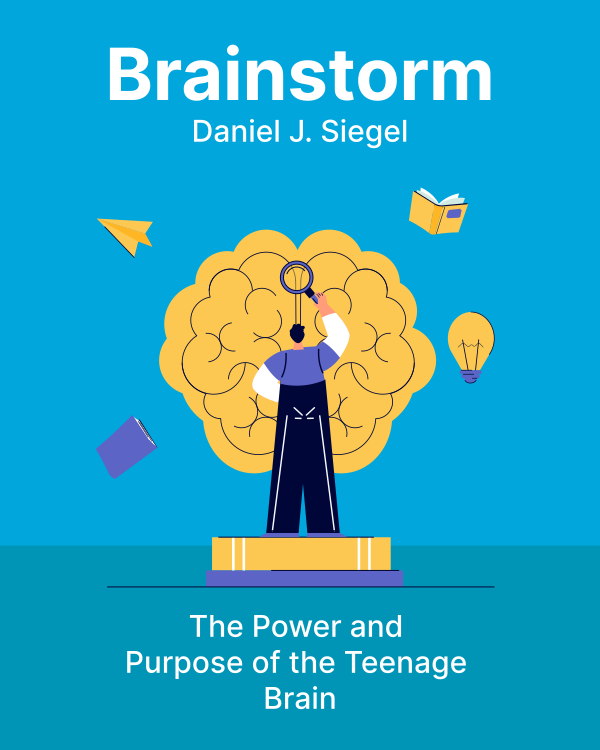
Daniel J. Siegel is an American psychiatrist, neuroscientist, and author known for his work in the fields of mental health, attachment theory, and interpersonal neurobiology. He is a prominent figure in the fields of psychology and neuroscience and has made significant contributions to understanding the human mind and its development.
Teenagers often face negative stereotypes, being perceived as lazy, unruly, or lacking intelligence. However, the reality is that throughout adolescence, they develop essential skills for adulthood, including critical thinking, self-reflection, independence, and social bonding. Despite their potential, teenagers require support from parents and teachers to navigate their inclination for risks and boundary-pushing. Positive communication models and empathy can guide these adolescents toward success.
Reflect on moments of heightened emotions.
It's completely normal for parents to become angry and react strongly to their teenager's actions at times. If you do find yourself raising your voice, take some time to reflect on the situation. Was your reaction justified, or did you say or do something that requires an apology?
Adolescents are still very sensitive, so addressing any hurt feelings as soon as possible can prevent long-term damage to your relationship. Once communication is restored with your teen, you'll be better equipped to discuss any issues or behavioral concerns that they may need help handling in the future.
“As parents become more aware and emotionally healthy, their children reap the rewards and move toward health as well. That means that integrating and cultivating your own brain is one of the most loving and generous gifts you can give your children."
“Solitude is an essential experience for the mind to organize its own processes and create an internal state of resonance."
“Inviting our thoughts and feelings into awareness allows us to learn from them rather than be driven by them.”
Um den Rest des Buches zu lesen, können Sie
Bitely herunterladen










 10 min
 7 Bite
 Einblick
 7 Bites