Buchzusammenfassung
Carl Safina holds the endowed chair for nature and humanity at Stony Brook University and is also a staff member of the Alan Alda Center for Communication Science. He has published in National Geographic as well as the New York Times and hosts a PBS series.
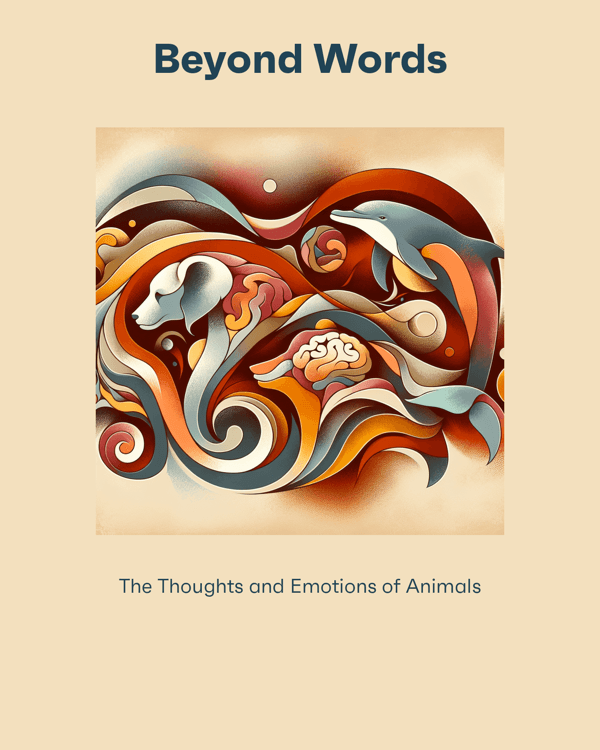
The human brain shares structural similarities with those of other mammals, enabling animals to think, feel, and act in ways comparable to humans. Cognition, evident across species, allows animals like elephants to learn through observation and experience. Despite differences in brain size, intelligence is more closely linked to structural similarities with human brains, as seen in social animals like chimpanzees, elephants, and dolphins. However, anthropomorphism and anthropocentrism often distort our understanding of animal emotions and cognition. Recognizing animals' unique abilities, such as elephants' exceptional hearing or killer whales' complex social structures, highlights their individuality and intelligence. From the cooperative nature of wolf packs to the domestication of dogs, animals demonstrate remarkable adaptability, communication, and social organization. Yet, human interference, such as hunting and habitat destruction, continues to threaten their survival. Understanding and respecting these creatures' distinct traits and shared evolutionary history with humans is essential for appreciating their capacity for thought, emotion, and complex behavior.
Um den Rest des Buches zu lesen, können Sie
Bitely herunterladen

 17 min
 10 Bite
 Einblick


 10 Bites