Buchzusammenfassung
Bhu Srinivasan is a media entrepreneur who came to the USA from India at the age of eight, traveling widely around the country with his family. Early in his career, he founded a news aggregation startup, and went on to work in gaming, publishing, and data. He now lives in Connecticut with his wife and children. Americana is his first book.
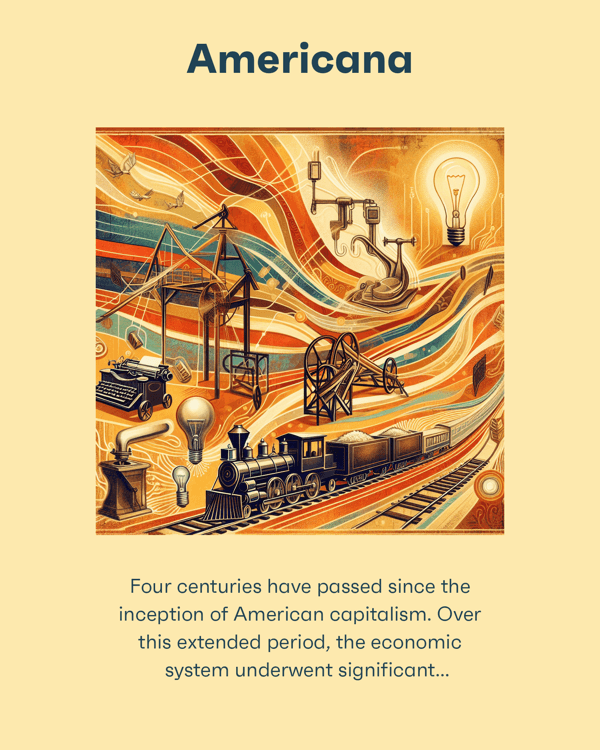
The transformative power of innovation shaped America’s trajectory, from the cotton gin revolutionizing agriculture to Samuel Morse’s telegraph enabling instant communication, which proved vital during the Civil War. Post-war advancements like the typewriter opened new opportunities, particularly for women, while Thomas Edison’s contributions to artificial light and A.T. Stewart’s department store concept redefined daily life. Figures like Rockefeller and Carnegie exemplified the era’s blend of invention and business acumen. The acquisition of western territories during the Mexican-American War, coupled with the California Gold Rush, spurred migration and economic growth but heightened tensions over slavery, ultimately leading to the Civil War. The Southern economy’s reliance on slavery and cotton trade left it vulnerable, while the North’s industrial strength, bolstered by innovations like railroads and the discovery of oil, underscored the nation’s resource-driven capitalism. These developments, alongside transformative infrastructure projects like steamboats, canals, and railroads, showcased the interplay of geography, technology, and government support in shaping America’s economy. As the Gilded Age unfolded, figures like Rockefeller and Carnegie dominated industries like oil and steel, aided by government tariffs and strategic investments, while the roots of capitalism traced back to ventures like the Mayflower’s financing. The 20th century brought new economic shifts, from the rise of Silicon Valley to the influence of public works projects like the interstate highway system, which reshaped industries and lifestyles. Government intervention grew, particularly during wartime and economic crises, as seen in Roosevelt’s New Deal and the mobilization for World War II. Postwar suburbanization, driven by developers like Bill Levitt, symbolized cultural and economic shifts but also highlighted persistent racial inequalities, reflecting the complex interplay of innovation, capitalism, and societal change in America’s history.
Um den Rest des Buches zu lesen, können Sie
Bitely herunterladen

 17 min
 11 Bite
 Einblick


 11 Bites