
Self-Growth
Against CreativityAgainst Creativity

Against Creativity

user-icon

Oli Mould

Creativity has evolved across history, from divine inspiration to individual expression, and now into a marketable skill shaped by neoliberal capitalism. Today, creativity is often co-opted to serve economic interests, whether through the commodification of human differences, the exploitation of freelance workers, or the transformation of urban spaces into profit-driven "creative cities." Even technological innovation, once a realm of boundless potential, has been redirected toward monetizing personal data and reinforcing market priorities. While this system rewards certain privileged groups, it marginalizes others, failing to embrace diverse perspectives as valuable in their own right. Yet, alternative models—such as worker cooperatives and community-centered policies—offer glimpses of how creativity could be reclaimed as a force for equity and meaningful change. In the next chapter, we will explore how these dynamics continue to shape our world and examine pathways to reimagine creativity beyond its current constraints.

clock14 min
bite6 Bite
target Einblick

Worum geht es?

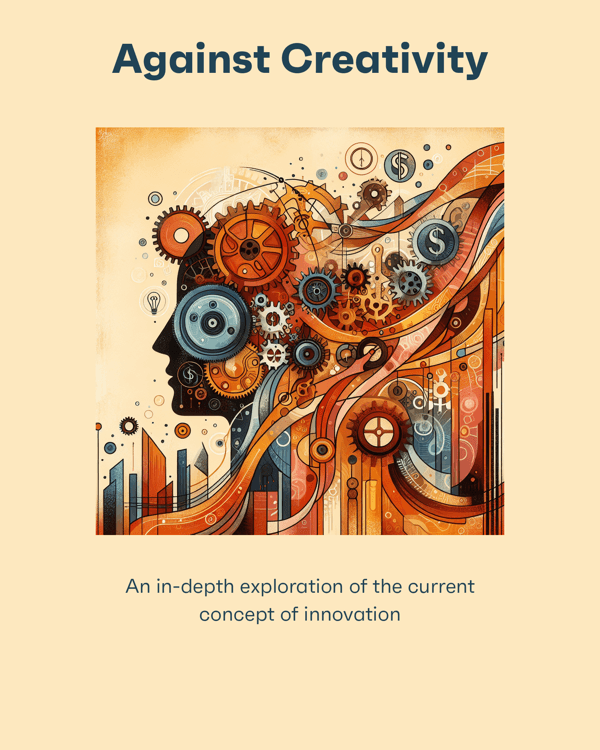
This book explores how creativity, once a boundless expression of human potential, has been reshaped by societal and economic forces. From its divine origins to its commodification under neoliberal capitalism, creativity is examined as both a tool for innovation and a mechanism of exploitation. Through vivid examples—from tech giants to urban transformations—it reveals how creativity has been co-opted to sustain existing power structures while offering glimpses of how it might be reclaimed as a force for meaningful change. Engaging and thought-provoking, it challenges readers to rethink the true essence of creativity in our modern world.

Buchzusammenfassung

Oli Mould is a professor of Human Geography at the University of London. His previous work, Urban Subversion and the Creative City, examined the promise and limitations of contemporary social activist movements.

Creativity has evolved across history, from divine inspiration to individual expression, and now into a marketable skill shaped by neoliberal capitalism. Today, creativity is often co-opted to serve economic interests, whether through the commodification of human differences, the exploitation of freelance workers, or the transformation of urban spaces into profit-driven "creative cities." Even technological innovation, once a realm of boundless potential, has been redirected toward monetizing personal data and reinforcing market priorities. While this system rewards certain privileged groups, it marginalizes others, failing to embrace diverse perspectives as valuable in their own right. Yet, alternative models—such as worker cooperatives and community-centered policies—offer glimpses of how creativity could be reclaimed as a force for equity and meaningful change. In the next chapter, we will explore how these dynamics continue to shape our world and examine pathways to reimagine creativity beyond its current constraints.

Um den Rest des Buches zu lesen, können Sie Bitely herunterladen
appstoregoogleplayapp gallery
Alle Bissen
bite6 Bites

How Capitalism Co-Opts Human Creativity

1
logo

Redefining Work: Creativity Beyond Capitalism

2
logo

Redefining Creativity: Embracing Diverse Perspectives

3
logo

Creativity Exploited: How Austerity Redefined Innovation

4
logo

Monetizing Connection: How Tech Profits from Creativity

5
logo

How Creative Cities Erase Local Communities

6
logo

Verwandte Bücher

mailbox-icon

Möchten Sie weiter lernen?

Verpassen Sie keine Updates aus dem aufregenden Universum von Bitely!