.png&w=2048&q=75)
It’s now embraced by people of all ages, not just for spiritual purposes but also as a tool for mental well-being.
So, what exactly is meditation, how is it practiced, what are the different types of meditation, and what common mistakes should be avoided?
Table of Contents
- What is Meditation?
- How to Meditate?
- Types of Meditation
- Benefits of Meditation
- Common Mistakes When Meditating
- Conclusion
What is Meditation?
Meditation is a mental practice focused on calming the mind and increasing awareness. It typically involves concentrating on the breath, a sound, a visual image, or a mantra.
The goal is to train the mind to remain in the present moment, preventing it from wandering to the past or future. By doing so, meditation helps reduce stress, anxiety, and mental clutter.
Meditation is an ancient technique with roots that date back thousands of years, particularly in Eastern cultures such as India, China, and Japan. While traditionally tied to spiritual practices in Buddhism, Hinduism, and Taoism, today many people use it as a mental health tool rather than a religious practice.
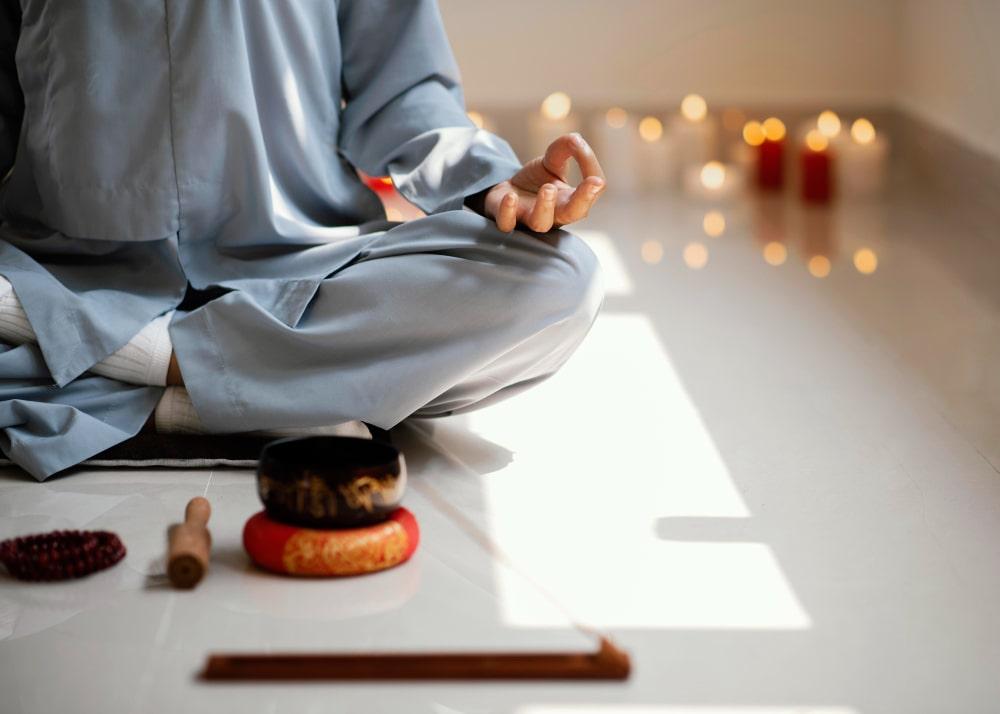
How to Meditate?
You don’t need any special preparation to meditate, but choosing a quiet environment can help you focus and relax. Here are the basic steps to meditate:
- Find a comfortable position: You can sit or lie down. Sitting is more common as it helps keep you alert. Keep your posture upright and relaxed.
- Focus on your breath: Breathing is at the core of meditation. Take deep breaths and focus solely on the rhythm of your breath. Observe the natural flow of your inhalation and exhalation.
- Be aware of your mind: Thoughts will arise during meditation, and that’s okay. Simply acknowledge them without getting caught up in them, then gently return your focus to your breath.
- Stay in silence and awareness: Continue to focus for the duration you set (usually 5-10 minutes to start). You can increase this time as you become more comfortable.
- End the meditation mindfully: When your time is up, slowly open your eyes and become aware of the present moment.
Types of Meditation
There are various types of meditation, each serving a different purpose. Here are some of the most common ones:
- Mindfulness Meditation: This practice is about observing the present moment without judgment. You become aware of thoughts, emotions, and body sensations as they arise.
- Loving-Kindness Meditation: In this practice, you send love, compassion, and goodwill to yourself and others. It helps foster emotional well-being and inner peace.
- Mantra Meditation: This involves the repetition of a word, phrase, or sound (like "Om") to quiet the mind and focus on the present moment.
- Focused Meditation: In this practice, you focus on a single object (a candle flame, your breath, or a sound) to prevent the mind from wandering.
- Transcendental Meditation (TM): This type uses a specific mantra to transcend ordinary thought and reach a deeper state of awareness.

Benefits of Meditation
Meditation offers numerous benefits, both physically and mentally:
- Stress and Anxiety Reduction: Meditation helps lower stress hormones, promoting relaxation. Studies show that regular meditators have lower stress levels.
- Improved Mental Clarity and Focus: Meditation enhances concentration and mental clarity, helping with decision-making and focus in daily life.
- Better Sleep: Meditation, especially for those who struggle with insomnia, can aid in calming the mind and making it easier to fall asleep.
- Emotional Health: Meditation helps individuals better understand and manage their emotions. Loving-kindness meditation, in particular, enhances empathy and forgiveness.
- Stronger Immune System: By reducing stress, meditation supports the immune system and overall physical health.
Common Mistakes When Meditating
Here are some common mistakes people make when meditating that can hinder progress:
- Being Too Focused on Results: The purpose of meditation is not to achieve a specific result, but to simply observe the present moment. Focusing too much on outcomes can lead to frustration.
- Getting Caught in Distractions: Your mind will naturally wander during meditation. Instead of getting frustrated, gently bring your focus back to your breath or object of attention.
- Starting with Long Sessions: It’s better for beginners to start with shorter meditation sessions (5-10 minutes) and gradually increase the time as they become more comfortable.
- Choosing a Distracting Environment: A quiet and comfortable environment is essential for effective meditation. Noise or discomfort can make it difficult to focus.
Conclusion
Meditation, when practiced regularly, can enhance the quality of life by promoting mental and emotional balance. It’s a simple yet powerful method for improving both mental and physical health.
Meditation is a flexible practice that can be tailored to each individual’s pace and needs. With consistent practice, a calmer, more focused, and peaceful life is within reach. If you’re new to meditation, take your time, and gradually build your practice.
If you're looking to calm your mind and live more mindfully, meditation is a great starting point. Our Mindfulness and Happiness collections on Bitely can guide you through this journey. Explore these collections now and take the first step towards a more peaceful life!


.png&w=2048&q=75 "Sun Tzu and ‘The Art of War’: The Evolution of Strategies Over Time")