Biography & History
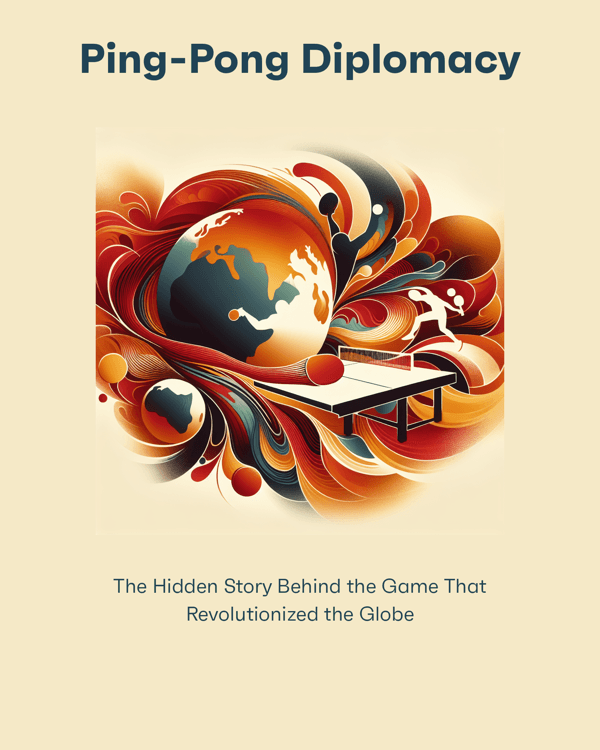
Ping-Pong DiplomacyPing-Pong Diplomacy

Ping-Pong Diplomacy

user-icon

Nicholas Griffin

At 21, Ivor Montagu traveled to the Soviet Union, captivated by its culture despite witnessing poverty. His aristocratic background and connections made him valuable to the Soviets, who enlisted him as a spy, gathering intelligence on British military capabilities and codebreaking efforts. Montagu’s passion for table tennis intertwined with his political ambitions, using the sport to promote communism. He championed the inclusion of Soviet and Chinese teams in international competitions, viewing ping-pong as a diplomatic tool. In China, table tennis gained popularity but lacked skillful players, prompting Montagu to push for its development. Meanwhile, Japan’s success in the sport inspired China, leading to ping-pong’s role in diplomacy, particularly during the 1971 World Championships, where a symbolic exchange between Chinese and American players paved the way for improved US-China relations. Montagu’s efforts revolutionized table tennis, transforming it from a pastime into a global sport and a platform for political influence.

clock13 دقيقة
bite9 Bite
target رؤية

ما الموضوع؟

Ivor Montagu’s extraordinary life intertwines the worlds of sports, politics, and espionage. Born into British aristocracy, he transformed table tennis from a parlor game into a global sport while secretly advancing communist causes. His passion for socialism and table tennis led him to use the game as a diplomatic tool, fostering connections between nations during pivotal historical moments. From shaping the sport’s modern rules to orchestrating groundbreaking events like Ping-Pong Diplomacy, Montagu’s legacy reveals how a simple game became a powerful instrument of international influence.

ملخص الكتاب

Nicholas Griffin is a novelist and journalist. He has written for The Times, the Financial Times, and Foreign Policy. His published books include four novels and The Year of Dangerous Days, a history of the year 1980 in Miami.

At 21, Ivor Montagu traveled to the Soviet Union, captivated by its culture despite witnessing poverty. His aristocratic background and connections made him valuable to the Soviets, who enlisted him as a spy, gathering intelligence on British military capabilities and codebreaking efforts. Montagu’s passion for table tennis intertwined with his political ambitions, using the sport to promote communism. He championed the inclusion of Soviet and Chinese teams in international competitions, viewing ping-pong as a diplomatic tool. In China, table tennis gained popularity but lacked skillful players, prompting Montagu to push for its development. Meanwhile, Japan’s success in the sport inspired China, leading to ping-pong’s role in diplomacy, particularly during the 1971 World Championships, where a symbolic exchange between Chinese and American players paved the way for improved US-China relations. Montagu’s efforts revolutionized table tennis, transforming it from a pastime into a global sport and a platform for political influence.

لتقرأ بقية الكتاب يمكنك تنزيل Bitely

appstoregoogleplayapp gallery
كل اللقطات
bite9 Bites

From Parlor Game to Political Powerhouse

1
logo

From Aristocrat to Revolutionary: Montagu’s Table Tennis Legacy

2
logo

Montagu’s Journey: Spying, Politics, and Ping-Pong

3
logo

Ping-Pong's Rise: Diplomacy Through Rivalry

4
logo

Ping-Pong Power: China’s Global Breakthrough

5
logo

Ping-Pong’s Role in Revolutionizing Global Politics

6
logo

Ping-Pong Sparks a Global Diplomatic Shift

7
logo

Ping-Pong Diplomacy: Bridging Nations Through Sport

8
logo

Breaking Barriers: How Ping-Pong Bridged Nations

9
logo

كتب ذات صلة

mailbox-icon

هل تريد الاستمرار في التعلم؟

لا تفوت التحديثات من عالم Bitely المثير!

Logo
appstoregoogleplay
app gallery

تابعنا على وسائل التواصل الاجتماعي

tiktokxinstagramyoutubelinkedinfacebook