Biography & History
One SummerOne Summer

One Summer

user-icon

Bill Bryson

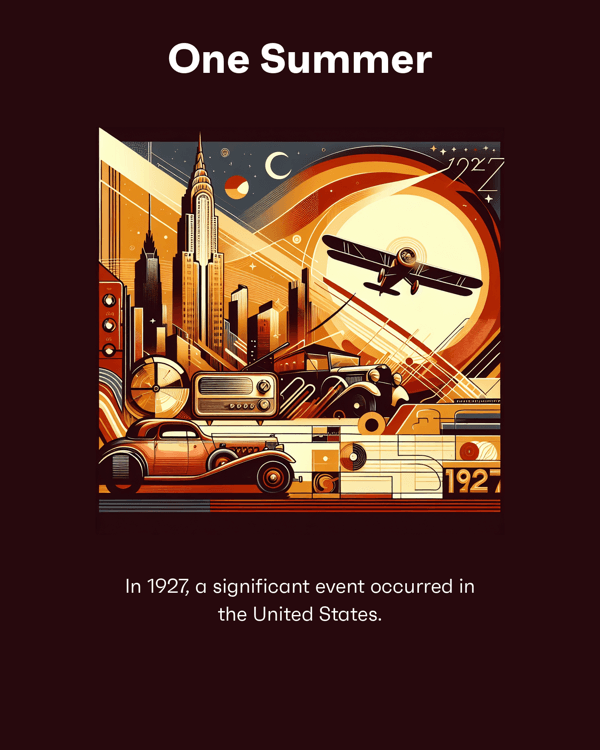
In 1927, the United States epitomized unprecedented wealth and global influence, producing 42 percent of the world’s goods and holding half of its gold reserves. This prosperity fueled a consumer-driven culture, with installment plans enabling widespread access to modern conveniences like cars, radios, and refrigerators. However, unchecked borrowing and speculative investments contributed to the stock market bubble that would later burst, leading to the Great Depression. The decade, celebrated as the Jazz Age, also revealed deep societal divides, marked by xenophobia, racism, and the popularity of eugenics. Meanwhile, Hollywood revolutionized global culture with the advent of sound films, and Babe Ruth’s record-breaking achievements symbolized American pride. Aviation, previously underdeveloped in the U.S., gained momentum after Charles Lindbergh’s historic transatlantic flight, which inspired national enthusiasm and spurred massive investments in the industry. As the nation basked in its achievements, underlying economic vulnerabilities and social tensions foreshadowed the challenges ahead.

clock9 دقيقة
bite5 Bite
target رؤية

ما الموضوع؟

In 1927, the United States stood at the height of its economic and cultural influence, marked by unprecedented wealth, technological innovation, and social transformation. From the rise of Hollywood and the groundbreaking introduction of sound in film to Charles Lindbergh’s historic transatlantic flight, the year reshaped global perceptions of American ingenuity. Yet, beneath the prosperity of the Jazz Age lay deep societal tensions, including rampant xenophobia, racial inequality, and the troubling embrace of eugenics. This pivotal year captures the duality of an era defined by both dazzling achievements and profound challenges, offering a vivid snapshot of a nation on the cusp of change.

ملخص الكتاب

Bill Bryson is an American best-selling author who writes on topics as diverse as the English language, science, and travel. He is also well-known for his humorous portrait of Great Britain in Notes From a Small Island, voted by BBC4 Radio listeners as the book most representative of their country.

In 1927, the United States epitomized unprecedented wealth and global influence, producing 42 percent of the world’s goods and holding half of its gold reserves. This prosperity fueled a consumer-driven culture, with installment plans enabling widespread access to modern conveniences like cars, radios, and refrigerators. However, unchecked borrowing and speculative investments contributed to the stock market bubble that would later burst, leading to the Great Depression. The decade, celebrated as the Jazz Age, also revealed deep societal divides, marked by xenophobia, racism, and the popularity of eugenics. Meanwhile, Hollywood revolutionized global culture with the advent of sound films, and Babe Ruth’s record-breaking achievements symbolized American pride. Aviation, previously underdeveloped in the U.S., gained momentum after Charles Lindbergh’s historic transatlantic flight, which inspired national enthusiasm and spurred massive investments in the industry. As the nation basked in its achievements, underlying economic vulnerabilities and social tensions foreshadowed the challenges ahead.

لتقرأ بقية الكتاب يمكنك تنزيل Bitely

appstoregoogleplayapp gallery
كل اللقطات
bite5 Bites

Lindbergh's Flight: Igniting America's Aviation Revolution

1
logo

America's 1927: Cinema, Sports, and Global Influence

2
logo

Dark Undercurrents of the Roaring Twenties

3
logo

1927: America’s Pinnacle of Wealth and Risk

4
logo

Coolidge’s Legacy: Wealth, Policy, and Collapse

5
logo

كتب ذات صلة

mailbox-icon

هل تريد الاستمرار في التعلم؟

لا تفوت التحديثات من عالم Bitely المثير!

Logo
appstoregoogleplay
app gallery

تابعنا على وسائل التواصل الاجتماعي

tiktokxinstagramyoutubelinkedinfacebook