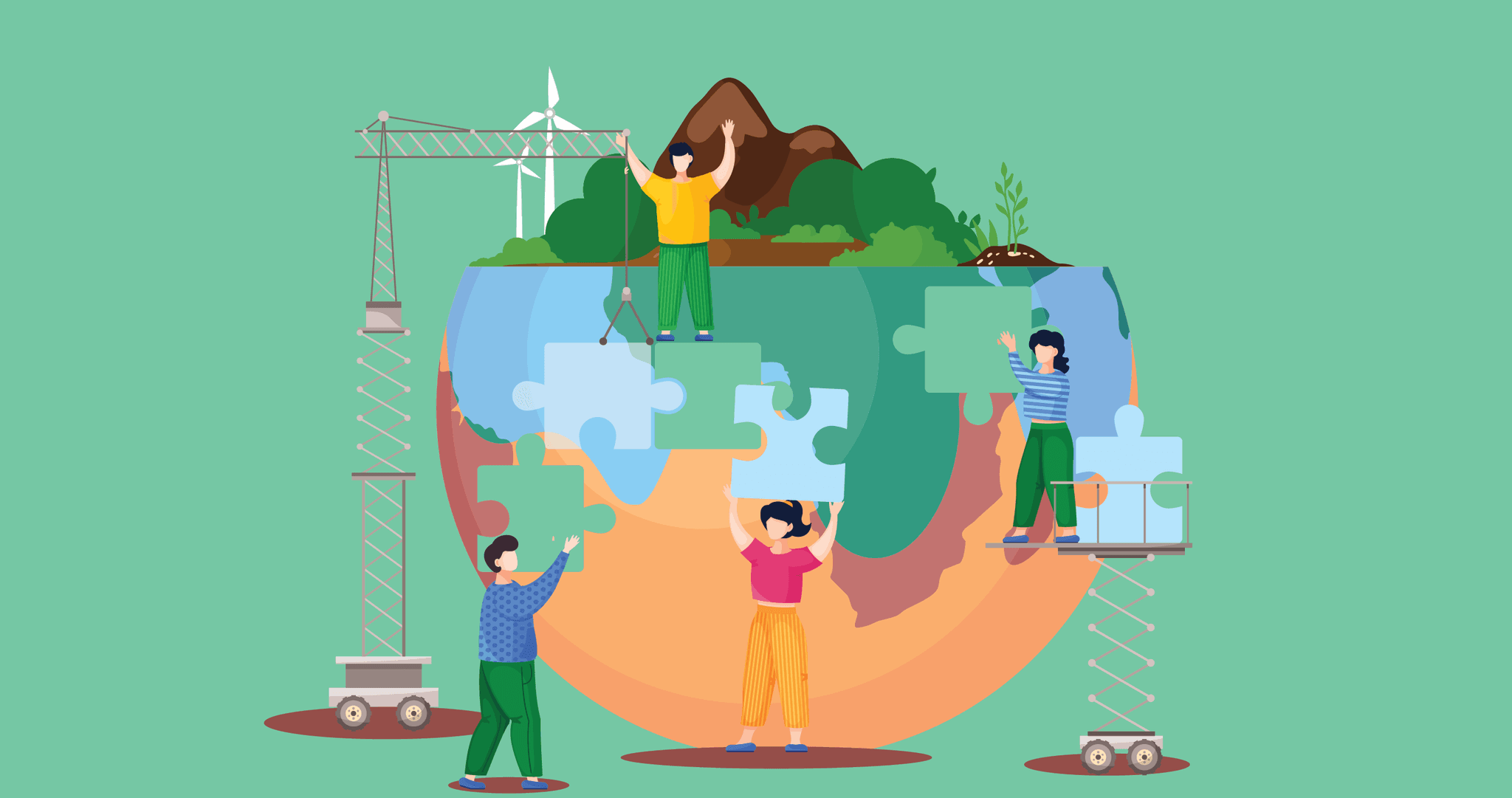
The world is changing rapidly. Factors such as technological innovations, social transformations, and climate change are increasing the uncertainty of the future. So, what does this perspective mean, and how is it connected to today's evolving world?
Table of Contents
- The Evolving World
- Determinism
- Cultural Determinism
- Biological Determinism
- Technological Determinism and Social Change
- Uncertainty and Determinism : A Paradox?
The Evolving World
The idea of determinism becomes complex. In an ever-changing world, predicting the future is difficult. New technologies, unexpected events, and human actions can lead to unforeseen outcomes. This makes it challenging to believe that everything is predetermined.
Determinism
It is a philosophical view that argues every event in the universe occurs within a framework of specific and predetermined cause-and-effect relationships. This concept was first introduced by Greek philosophers such as Heraclitus and Leucippus in the 6th or 7th century BCE. It was later examined and expanded by Aristotle. Following the Enlightenment, particularly starting from the late 18th century but more intensively from the mid-19th century onwards, deterministic systems became more common. Throughout this period, with the rise of natural sciences, the deterministic system, in its modern sense, came to express a strict and necessary determination that excludes randomness and chance, spreading across the entire universe.
In a deterministic worldview, the existence of free will is questioned; for every action is seen as the result of predetermined causes.
Cultural Determinism
Cultural determinism is a philosophical view that asserts individuals' thoughts, emotions, and behaviors are entirely determined by the culture they are part of. According to this view, from the moment they are born, people are shaped by elements such as language, values, traditions, and rules to which they are exposed, and these elements limit free will. To belong to a social group, people must adhere to the cultural norms around them. Culture intricately determines every aspect of human life through ideas, attitudes, and traditions passed down from one generation to the next.
Biological Determinism
Biologism, also known as biodeterminism, is a theory that proposes individuals' characteristics and behaviors are entirely determined by biological factors. According to this approach, environmental, social, and cultural factors do not play a significant role in an individual's development.
This theory asserts that the different conditions of groups in society, based on race, class, gender, and sexual orientation, are inherent and predetermined by biology. Throughout history, biologism has been used to justify white supremacy, gender discrimination, and other biases against human groups.
Technological Determinism and Social Change
In today's world, technological advancements have reignited debates among determinists. Technological determinism argues that technology is the fundamental force shaping society. For example, the invention of the internet has radically changed our access to information, communication, and even our thinking patterns. The increasing use of artificial intelligence in technology has intensified discussions about deterministic systems.
The complexity and decision-making capabilities of AI systems have strengthened some people's beliefs that our free will and actions are predetermined. These intelligence systems can analyze vast amounts of data to identify complex patterns and trends, enabling them to predict future events with high accuracy. Some believe this predictability is evidence that our choices and actions are, in fact, predetermined. Moreover, AI systems make decisions by learning from data, which can lead to the idea that our future actions are determined by past data.
Uncertainty and Determinism : A Paradox?
The complexity and uncertainty of our evolving world prompts us to deeply question the concept of determinism. This view posits that every event in the universe occurs within the framework of specific and predetermined cause-and-effect relationships. According to this perspective, every action we take and every event we experience is an unavoidable result of previous conditions and causes. However, today’s world is filled with many unpredictable and uncontrollable variables. These variables increase the uncertainty and complexity of the future, creating a situation that challenges a deterministic worldview.
For example, global policies are complex and dynamic processes that shape the fate of nations and communities around the world. Sudden changes in international relations, wars, peace agreements, and economic sanctions can significantly impact the future of a country and even an individual. Such changes can produce unpredictable outcomes, challenging the boundaries of the concept of determinism.
Natural disasters are also events based on specific causes but yield unpredictable results. Natural disasters such as earthquakes, tsunamis, hurricanes, and wildfires can occur suddenly and cause widespread devastation. While these events are based on certain causes, their outcomes are often uncertain and uncontrollable, occurring without human intervention.
These uncertainties challenge a deterministic worldview and bring discussions of free will back into focus. The rigid cause-and-effect relationships advocated by this line of thought may not always hold true in the dynamic and complex nature of today’s world. This suggests that individuals and societies might possess a certain level of free will regarding their future. The question of whether the future is entirely predetermined or if humans have the capacity to shape their own destinies remains central in philosophical debates.
The paradox between uncertainty and determinism reflects humanity's search for meaning in a complex and unpredictable world.


.png&w=2048&q=75 "Sun Tzu ve ‘Savaş Sanatı’: Stratejilerin Zaman İçindeki Evrimi")